Ontario licensing
When did Ontario introduce graduated licensing?
Ontario introduced graduated licensing in April 1994 for new car and motorcycle drivers. A full G still takes at least 20 months: 12 months at G1, or 8 with an approved BDE course, then 12 months at G2.
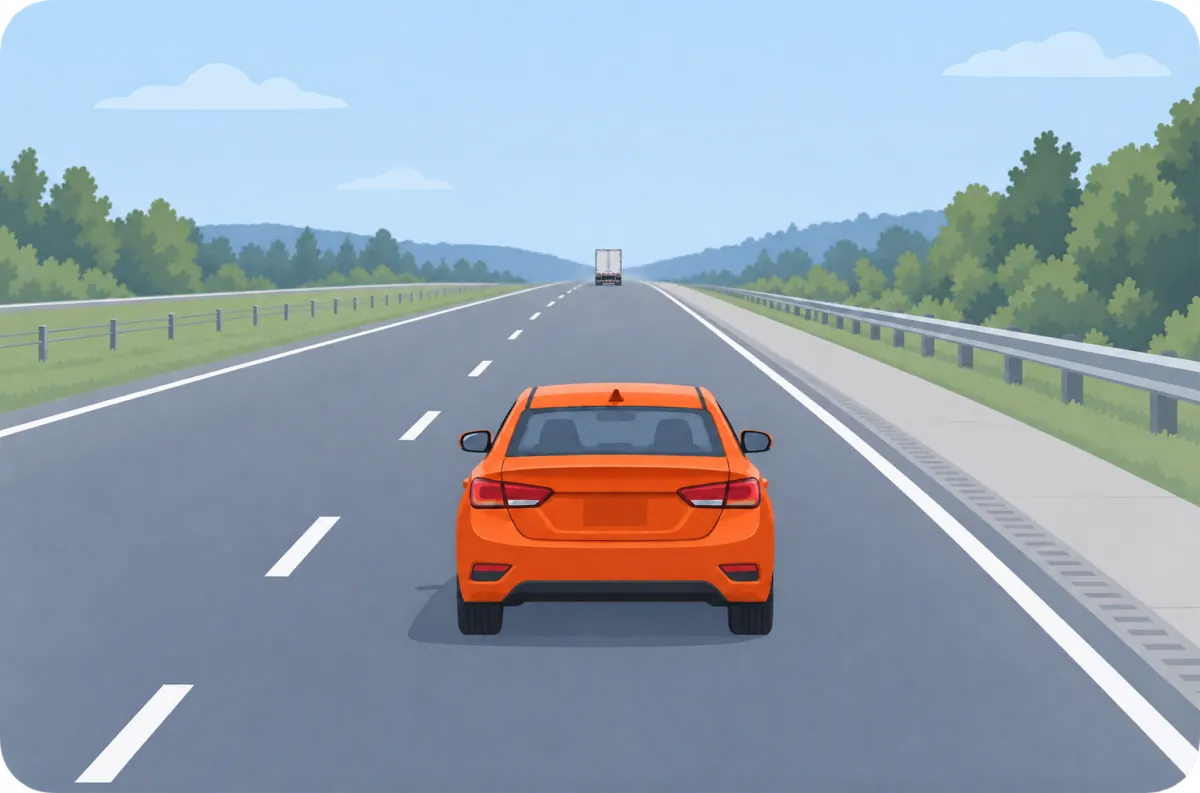
Ontario uses a graduated licensing system so new drivers build skill over time. You move through two learning levels, G1 and G2, and pass two road tests before you get a full G licence. The rules below come from the Ministry of Transportation, the Official MTO Driver's Handbook and DriveTest.
When was graduated licensing introduced in Ontario?
Ontario introduced graduated licensing in 1994. The Official MTO Driver's Handbook says it started that year for anyone applying for a first car or motorcycle licence, so new drivers could gain skill in lower-risk conditions before a full licence.
A Government of Ontario news release says Ontario introduced the first comprehensive graduated licensing program in North America in April 1994. The waits and conditions on this page are the current rules, not a description of the 1994 program. Confirm what applies to you on ontario.ca and DriveTest before you book.
How long does it take to go from G1 to G?
It takes at least 20 months. The Official MTO Driver's Handbook says the two-step process "takes at least 20 months to complete." DriveTest says most people take about 20 to 24 months.
- With BDE: 8 months at G1 plus 12 months at G2 = 20 months minimum.
- Without BDE: 12 months at G1 plus 12 months at G2 = 24 months minimum.
You have up to five years to finish the whole process.
Graduated licensing at a glance
| Level | Minimum time | Main conditions | Next step |
|---|---|---|---|
| G1 | 12 months, or 8 months with an approved BDE course | Zero blood alcohol. A fully licensed accompanying driver in the front seat. No driving from midnight to 5 a.m. No 400-series highways or high-speed expressways, unless with a licensed driving instructor. A working seatbelt for everyone. | Pass the G2 road test |
| G2 | 12 months | Zero blood alcohol. No more passengers than working seatbelts. Drivers 19 and under have passenger limits from midnight to 5 a.m. | Pass the G road test |
| G | None | Full Class G privileges. Drivers 21 and under must still keep a zero blood alcohol level. | Fully licensed |
How to get your G1
You get a G1 when you pass a vision test and a knowledge test at a DriveTest Centre. You must be at least 16 and an Ontario resident. Knowledge tests are first come, first served, so no appointment is needed.
As of May 11, 2026, you must also declare that Ontario is your primary place of residence and that your presence in Canada is legal. Bring original identification that shows your legal name and date of birth.
Study the Official MTO Driver's Handbook first. For practice questions, the G1 Prep app can help. See our G1 test guide for more.
G1 rules
G1 is Level One. By law, a G1 driver must:
- Keep a blood alcohol level of zero.
- Drive with a fully licensed driver who has at least four years of experience and a blood alcohol level under .05. If that driver is 21 or under, their level must be zero.
- Keep the accompanying driver as the only other person in the front seat.
- Make sure every passenger wears a working seatbelt.
- Not drive between midnight and 5 a.m.
- Not drive on 400-series highways or high-speed expressways, such as the QEW, Don Valley Parkway, Gardiner Expressway, E.C. Row Expressway and Conestoga Parkway. A driving instructor licensed in Ontario can take you on any road.
How BDE shortens G1
An approved Beginner Driver Education course cuts your G1 time by four months, from 12 to 8. The course must come from a ministry-approved driving school and last at least 40 hours: at least 20 hours in class, 10 hours in the vehicle and 10 hours of flexible instruction.
Your completed course is noted on your driver's licence history. The handbook adds that it may also bring savings on car insurance. BDE is optional, but the Ministry of Transportation recommends it.
The G2 road test
The G2 road test is your G1 exit test. It checks basic skills such as turns, stopping, parallel parking, lane changes, 3-point turns and residential driving. DriveTest says it usually takes about 20 minutes. Read our G2 road test guide.
G2 rules
With a G2 you can drive alone, on all Ontario roads, at any time in most cases. You must still:
- Keep a zero blood alcohol level.
- Carry no more passengers than there are working seatbelts.
If you are 19 or under, between midnight and 5 a.m. you can carry only one passenger aged 19 or under during your first six months on G2. After six months, the limit rises to three. These limits do not apply if a fully licensed driver with four or more years of experience is with you, or if your passengers are immediate family.
The G road test
You can take the G road test after 12 months at G2. It tests advanced skills, including highway driving, and usually takes about 30 minutes. You must declare at least five highway trips in the last three months on roads with a speed limit of at least 80 km/h or on 400-series highways. Read our G road test guide.
How long is each licence valid?
Your G1 licence package includes a five-year licence. That five-year window is your deadline to finish graduated licensing.
If you are nearing five years without a full G, DriveTest says you can requalify as a G2 driver for another five years by passing the G2 road test again. Road test and licensing fees apply. Once your novice licence has expired, you may need to start over at G1.
If you fail a road test, you can retake it while your licence is valid. The handbook says you must wait at least 10 days between tests.
Penalties for novice drivers
G1 and G2 drivers face stricter penalties. Escalating penalties apply if you are convicted of breaking graduated licensing rules or of a Highway Traffic Act offence worth four or more demerit points. A first offence brings a 30-day suspension and a second brings 90 days. A third cancels your novice licence and you must re-apply and start over.
Demerit points also hit harder. New drivers get a warning letter at 2 to 5 points, a second warning at 6 to 8 points, and a 60-day suspension at 9 or more.
For costs at each step, see DriveTest fees. For recent rule changes, see Ontario driving updates.
Questions
When was graduated licensing introduced in Ontario?
In 1994. The Official MTO Driver's Handbook says Ontario introduced graduated licensing in 1994 for people applying for a first car or motorcycle licence. A Government of Ontario news release dates the first comprehensive program to April 1994.
What is the fastest way to get a G licence in Ontario?
Complete a ministry-approved Beginner Driver Education (BDE) course so you can take the G2 road test after 8 months at G1. Then spend 12 months at G2 and pass the G road test. That is 20 months at minimum.
How long do I have to wait between G1 and G2?
You must hold your G1 for 12 months before the G2 road test. If you pass an approved BDE course, the wait drops to 8 months.
What happens if I don't get my full G within five years?
You have up to five years to finish graduated licensing. DriveTest says you can requalify as a G2 driver for another five years by passing the G2 road test again, with road test and licensing fees. Once your novice licence has expired, you may need to start over at G1.
Can a G1 driver drive on the 401?
Not on your own with a regular accompanying driver. G1 drivers cannot use 400-series highways or high-speed expressways unless the accompanying driver is a driving instructor licensed in Ontario.
Do G2 drivers need someone in the car?
No. G2 drivers can drive alone on all Ontario roads. You must keep a zero blood alcohol level, and drivers 19 and under have passenger limits between midnight and 5 a.m.
Sources
- Ontario.ca: Get a G driver's licence: new drivers
- Official MTO Driver's Handbook: Getting your driver's licence
- Official MTO Driver's Handbook: The Level Two road test
- Ontario news release: Making Ontario's Roads Safer
- DriveTest: Drivers' licences for cars, vans and small trucks
- DriveTest: Road tests for cars
- Ontario.ca: Understanding demerit points
Checked November 9, 2026. Rules and fees can change; confirm with DriveTest or ServiceOntario before your test.