Full G road test · Lesson 5 of 6
Exiting the Highway
A highway exit asks you to change pace and attention. First you leave the traffic stream safely. Then you manage a ramp, a lower speed and often an intersection. Prepare early enough to handle each part in order.
Set up the exit
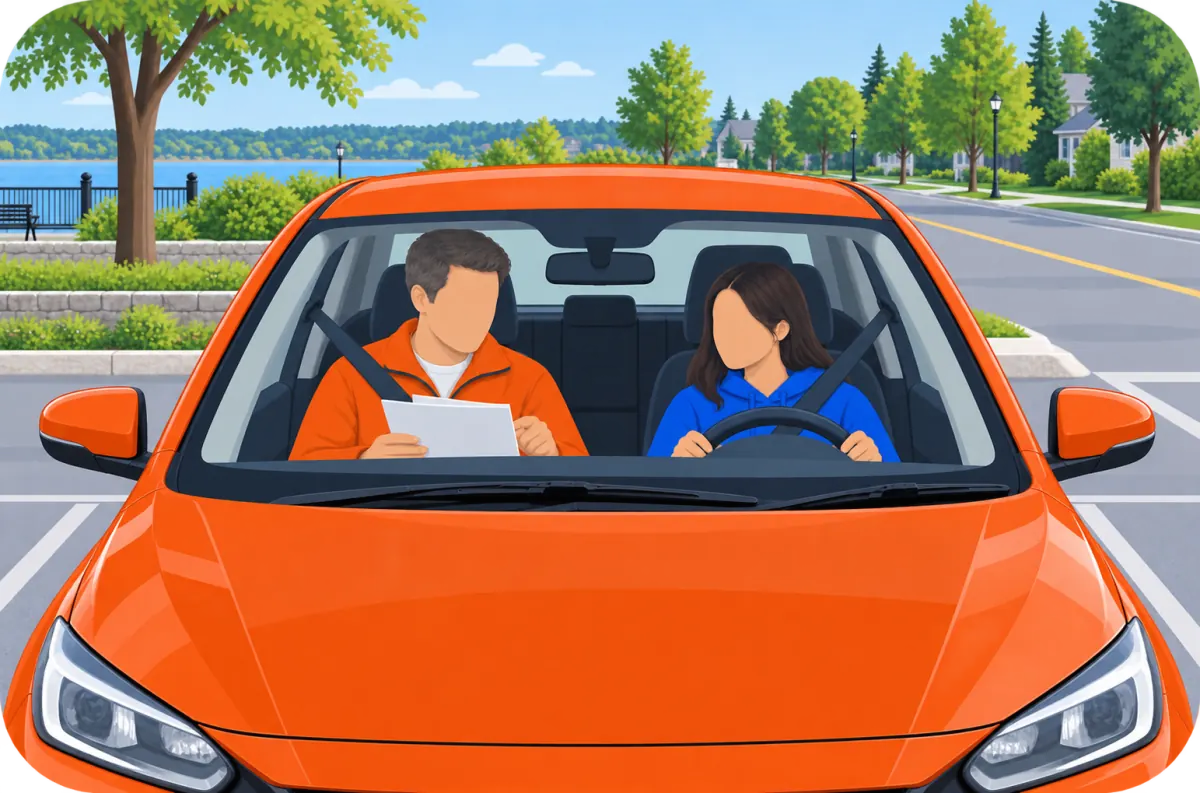
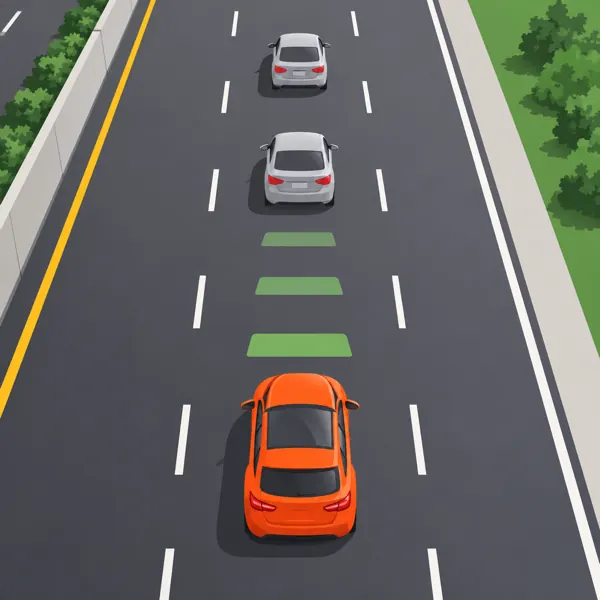
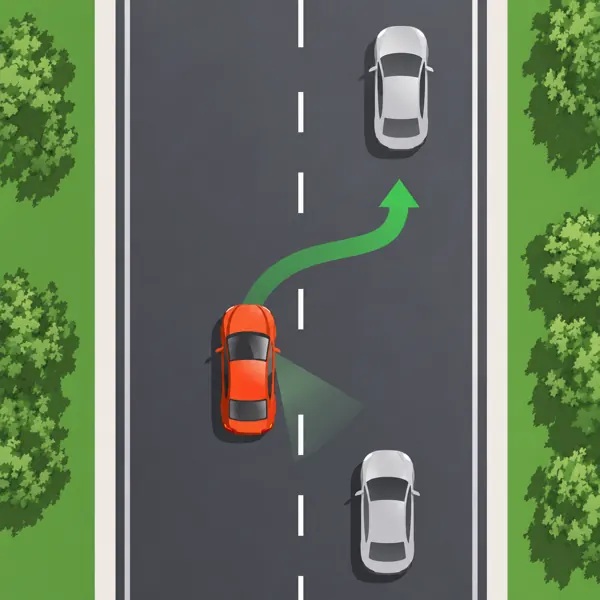
Listen to the direction and identify the correct exit from the signs. Move toward the appropriate lane well ahead, using a complete observation and signalling sequence for each lane change. Keep enough following space to see what is happening beyond the car in front.
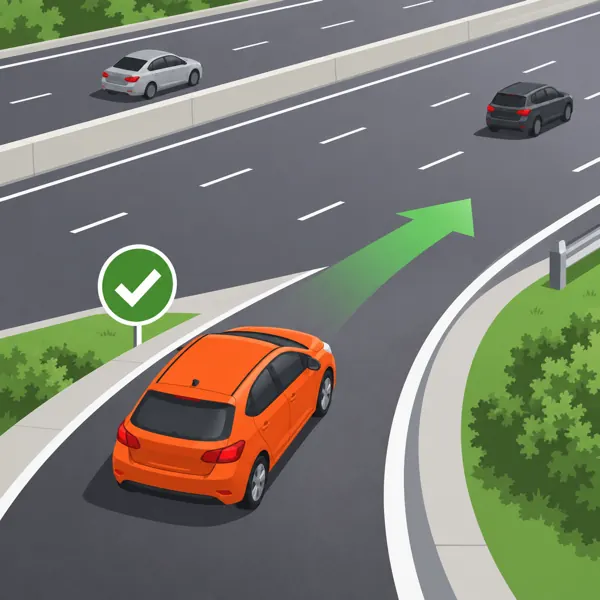
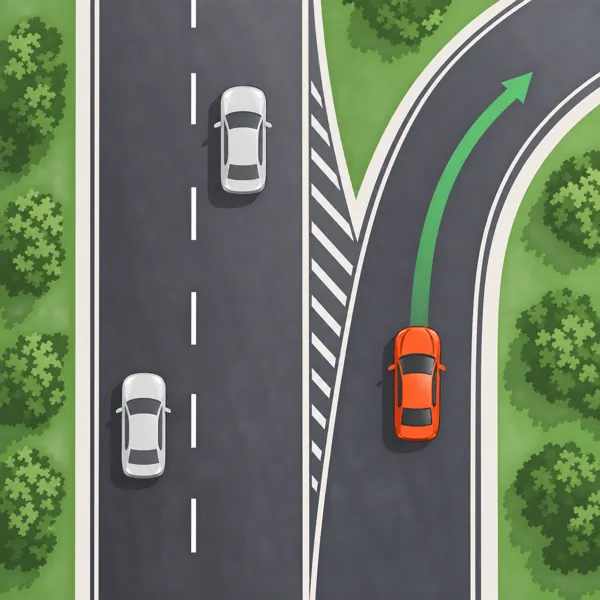
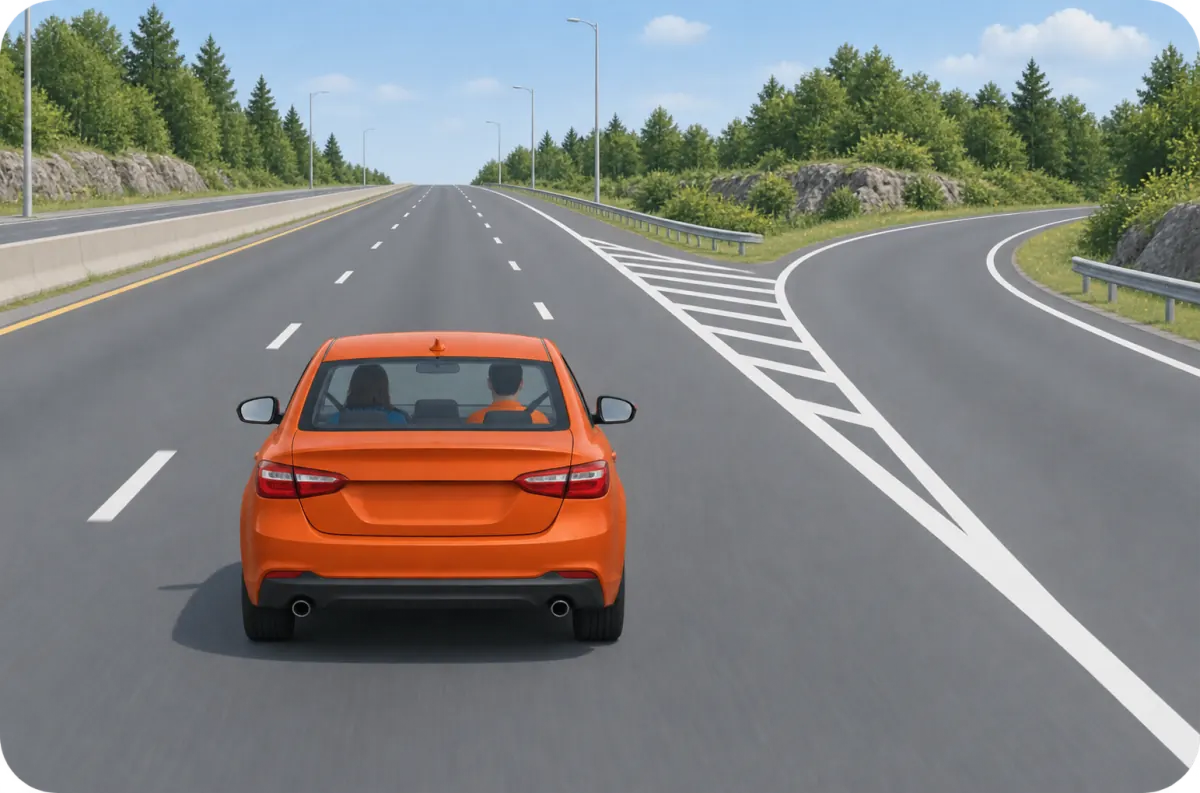
Before entering the exit lane, check the road ahead, mirrors and blind spot. Signal so nearby drivers understand the movement. Follow the lane markings into the exit lane without cutting over the painted separation area.
Reduce speed where there is room
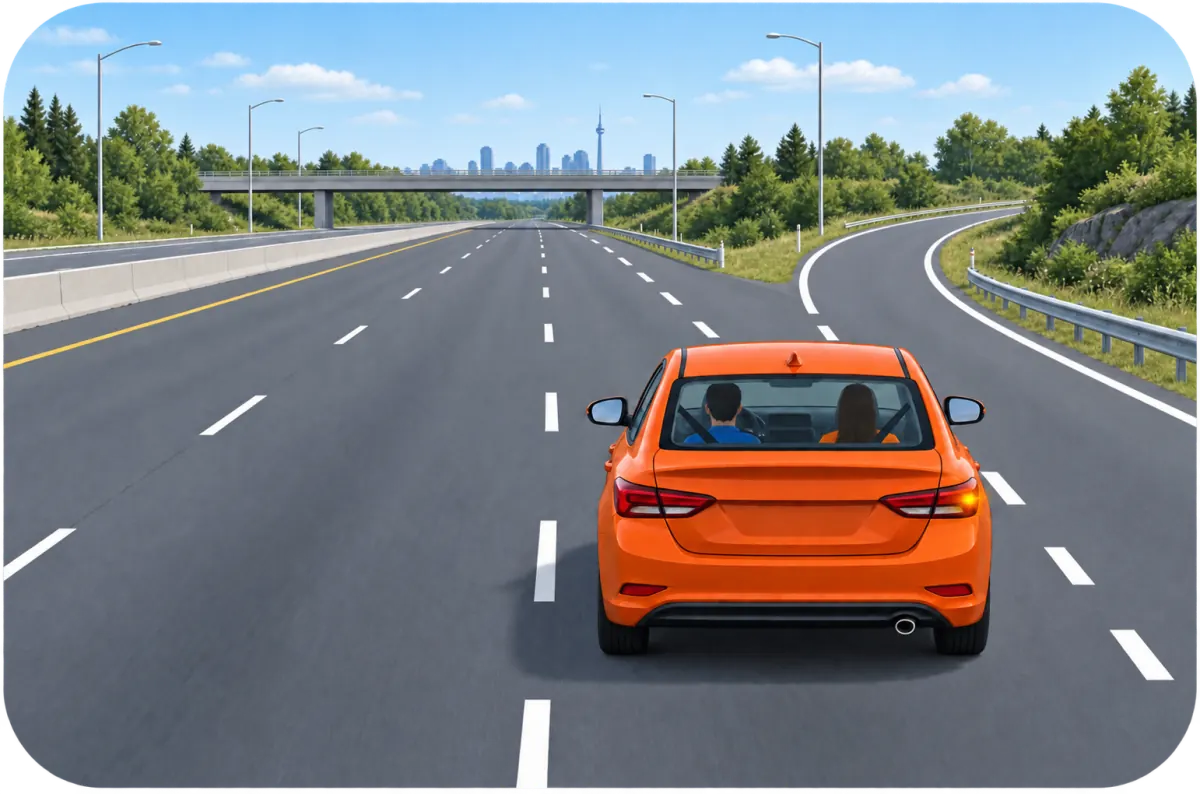
When traffic allows, maintain an appropriate highway pace until you are fully in the deceleration lane. Then reduce speed smoothly for the ramp. If traffic is queued or another hazard requires earlier braking, respond to that hazard. Do not continue at highway speed simply to follow a memorised routine.
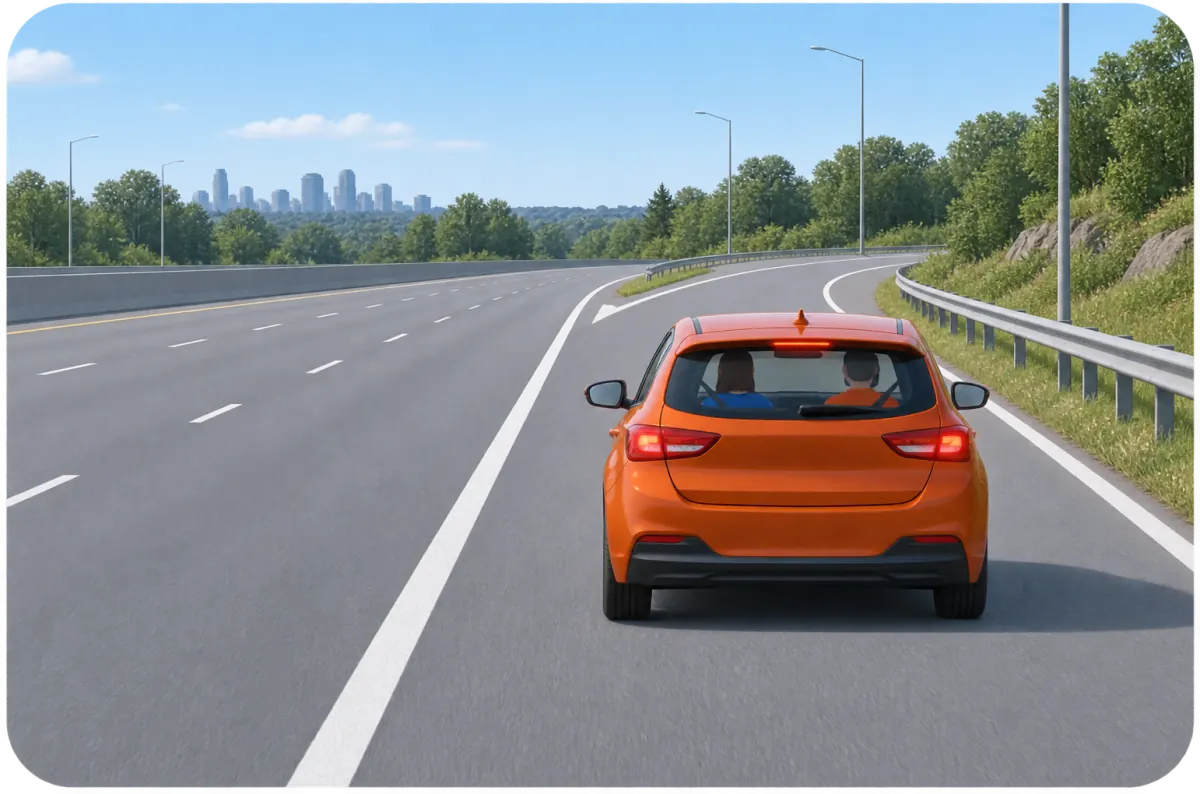
Be slow enough for the curve before entering it. Use the ramp's advisory speed as a guide, with a further reduction when grip or visibility is poor. Keep the steering controlled and look along the curve toward your path.
Check the speedometer. After highway travel, a lower speed can feel slower than it really is. Do not rely only on the sensation of speed.
Prepare for the next junction
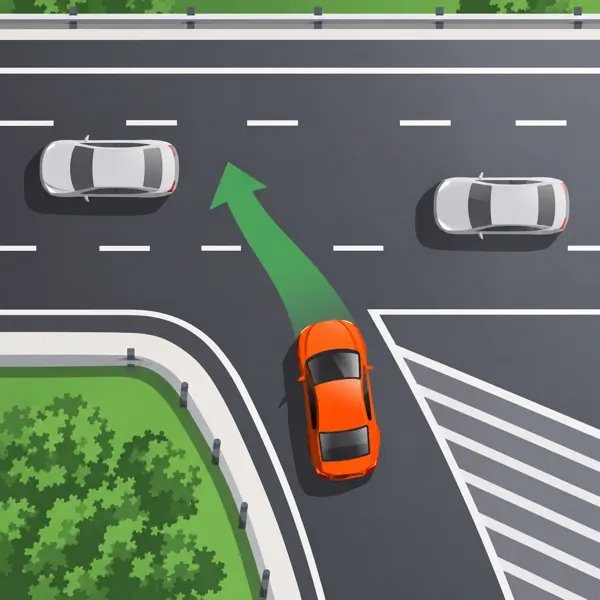
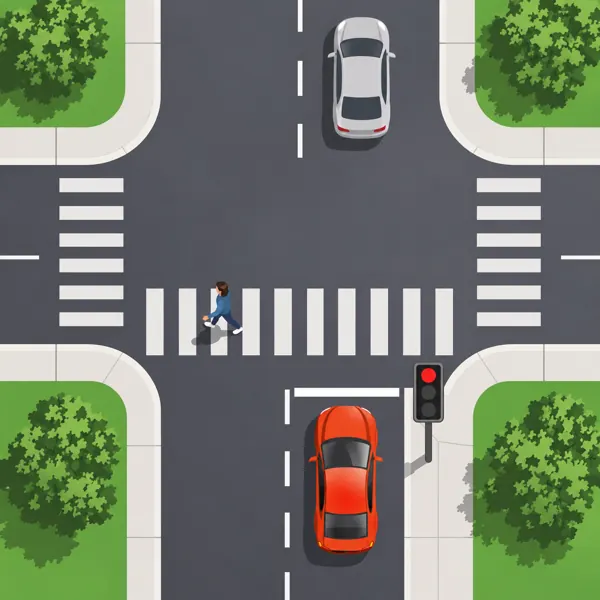
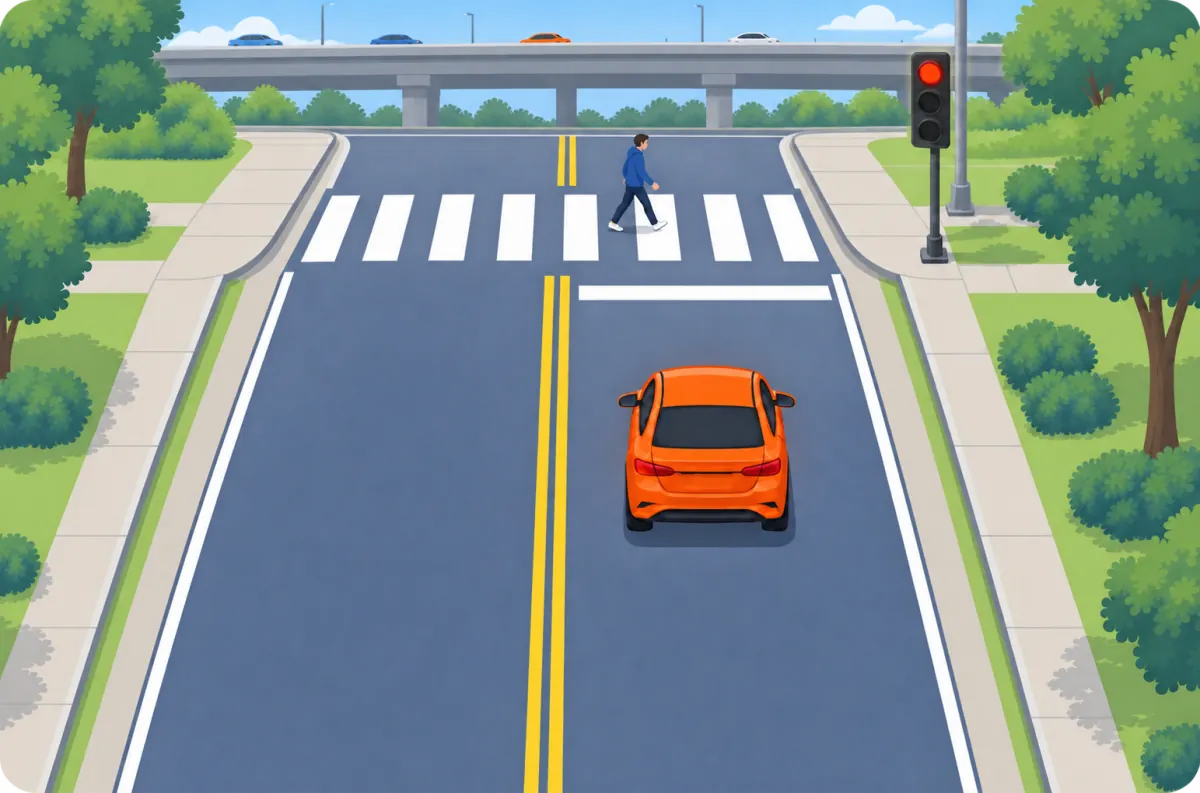
Look for stop signs, signals, yield signs and lane arrows at the end of the ramp. Choose a suitable lane early and keep enough space to stop. If you need a turn signal after the exit movement, make sure it clearly communicates the next action.
For a right turn, check for pedestrians and cyclists as well as traffic from the left. For a left turn, make sure you can see the oncoming lanes and your destination lane. Return to the posted local-road speed after the turn, adjusting for conditions.
If you miss the exit
Continue to a safe, legal alternative and follow the examiner's next direction. Never reverse, stop abruptly on the highway or cut across the gore area to reach a missed ramp.
Practice check
After a practice exit, explain three decisions: where you moved into the exit lane, when you reduced speed, and what controlled the junction at the end. If your attention stayed on the highway behind you, practise shifting it earlier toward the ramp and intersection ahead.
Remember
The exit is not finished when you leave the highway. Stay deliberate through the first local-road intersection too.