Full G road test · Lesson 2 of 6
Merging onto a Highway
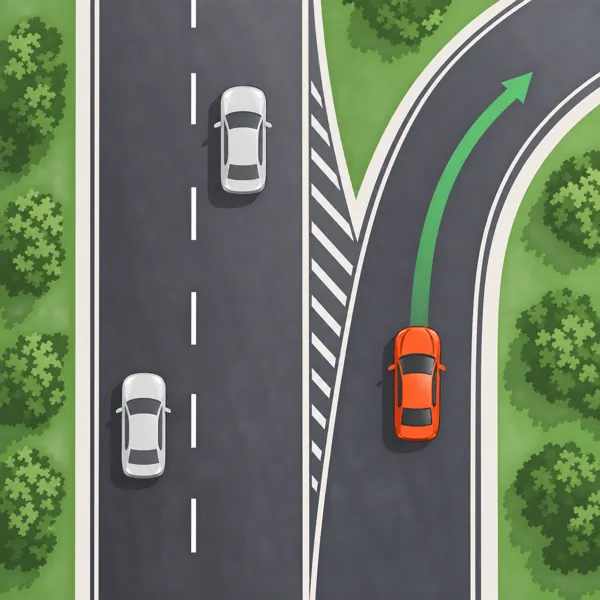
A good merge starts while you still have room to plan. Read the ramp, watch the traffic you will join and choose a gap early. Keep looking forward as you check beside and behind you.
First, understand your lane
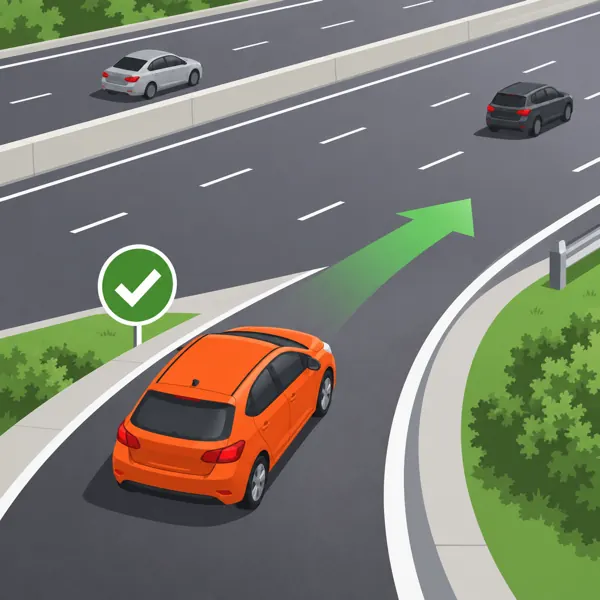
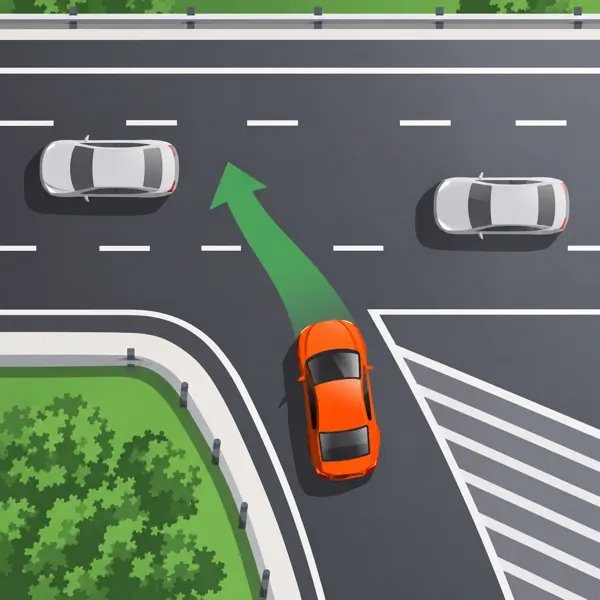
Some entrance lanes end and require a merge. Others become a continuing highway lane. Read the signs and lane markings so you know which situation you have. Do not move left automatically just because you have reached the highway.
Control your speed through the ramp's curve. Use the advisory speed and road conditions to guide your approach. As the road opens into an acceleration lane, build speed progressively to join traffic safely, while staying within the posted limit.
Plan the gap before moving
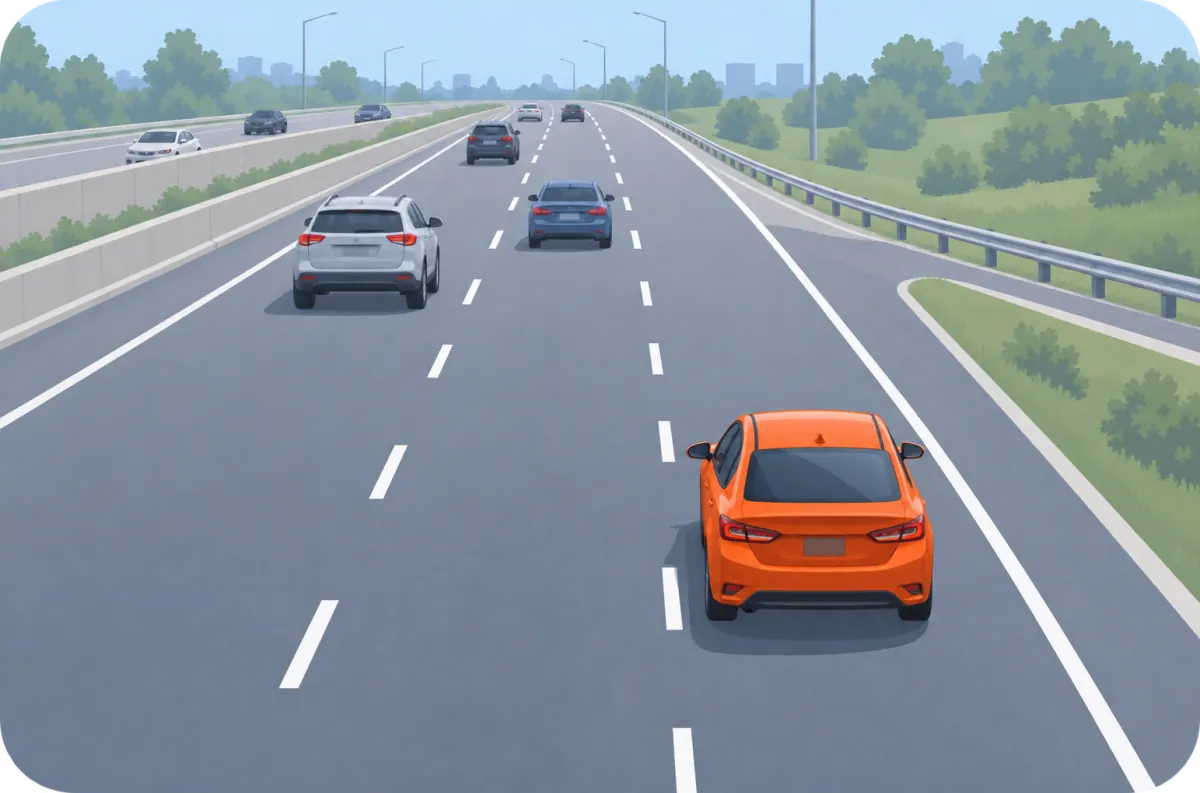
- Look ahead: Notice the car in front, the available lane length and any queue. Leave room for your own acceleration.
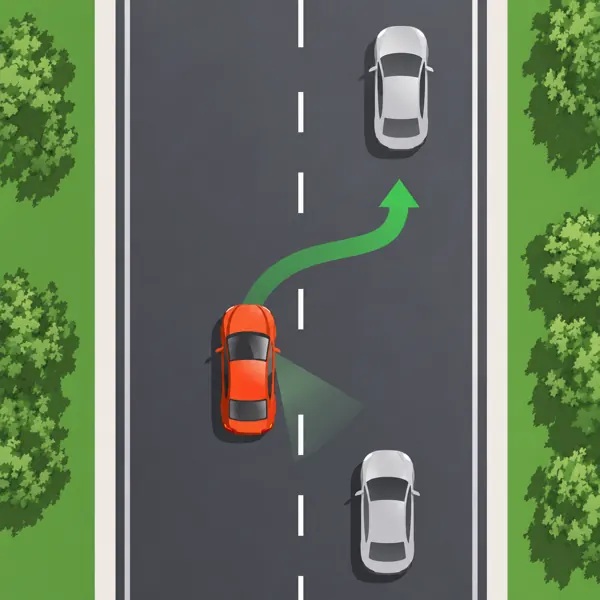
- Read highway traffic: Use the rear-view and relevant side mirror, with brief shoulder checks, to judge nearby vehicles and how quickly they are approaching.
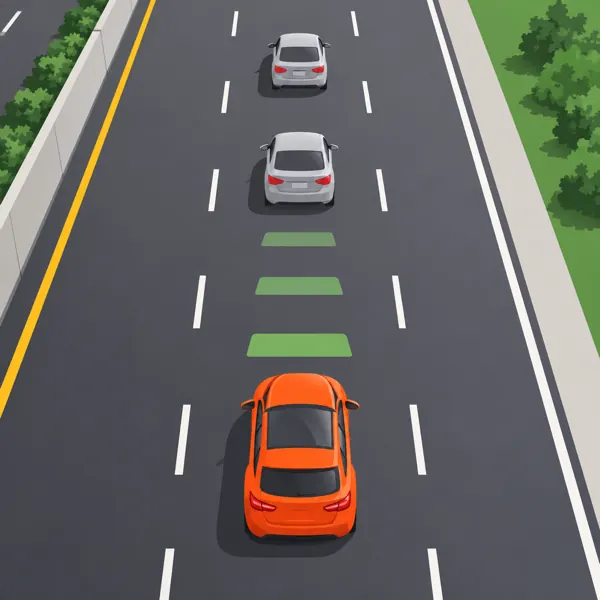
- Choose space: Aim for a gap that leaves room in front and behind after the merge. Adjust speed early to fit that gap.
- Signal and recheck: Communicate your intention, then confirm the gap and blind spot immediately before crossing the lane line.
- Merge smoothly: Move into the nearest through lane when safe. Establish your position, cancel the signal and rebuild a suitable following gap.
Keep checking the lane ahead between mirror glances. Steering toward the lane while still looking for a gap leaves you with fewer options.
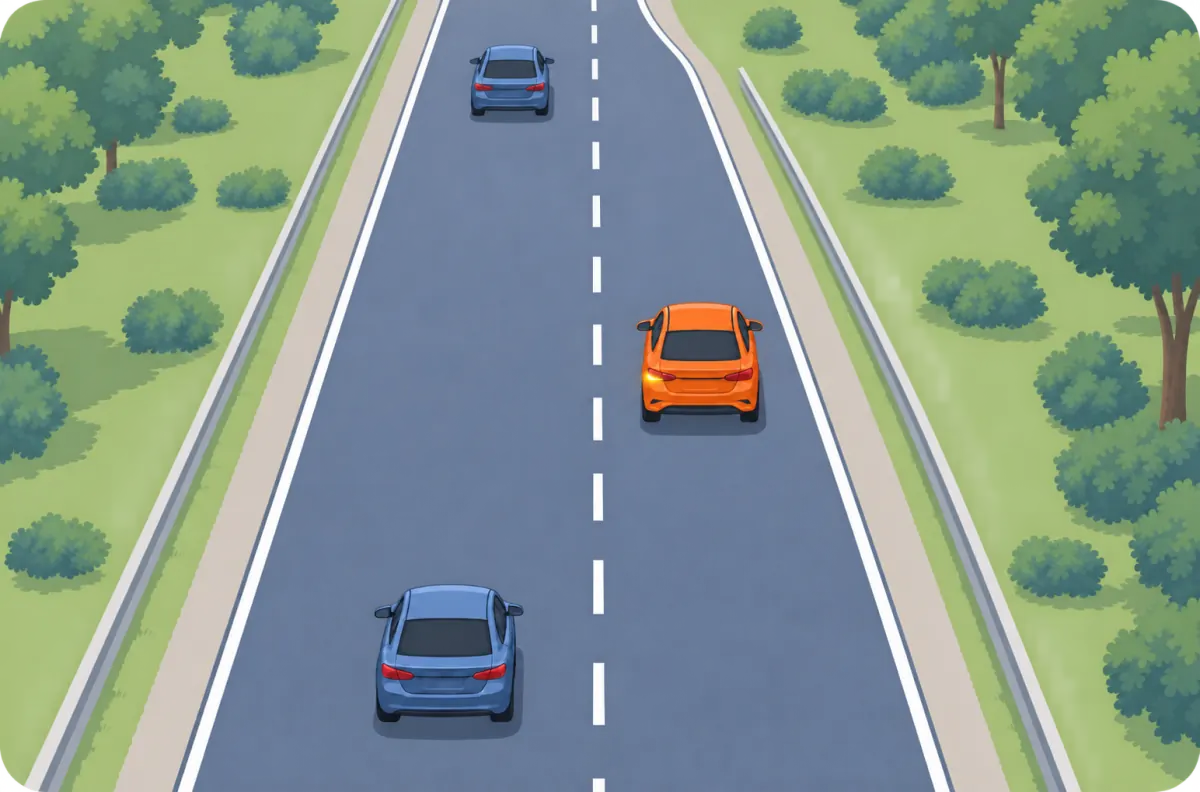
If a vehicle is alongside
A truck beside the ramp is a reason to plan early. Do not race toward the end of the lane trying to squeeze ahead. When safe, ease the accelerator to arrange a gap behind it, then adjust your speed to join smoothly with adequate following space.
If the chosen gap closes, reassess while you still have room. Yield to highway traffic. Do not force your way in, cross a painted gore area or use the shoulder as an extra acceleration lane. Avoid stopping unless traffic or safety makes it necessary.
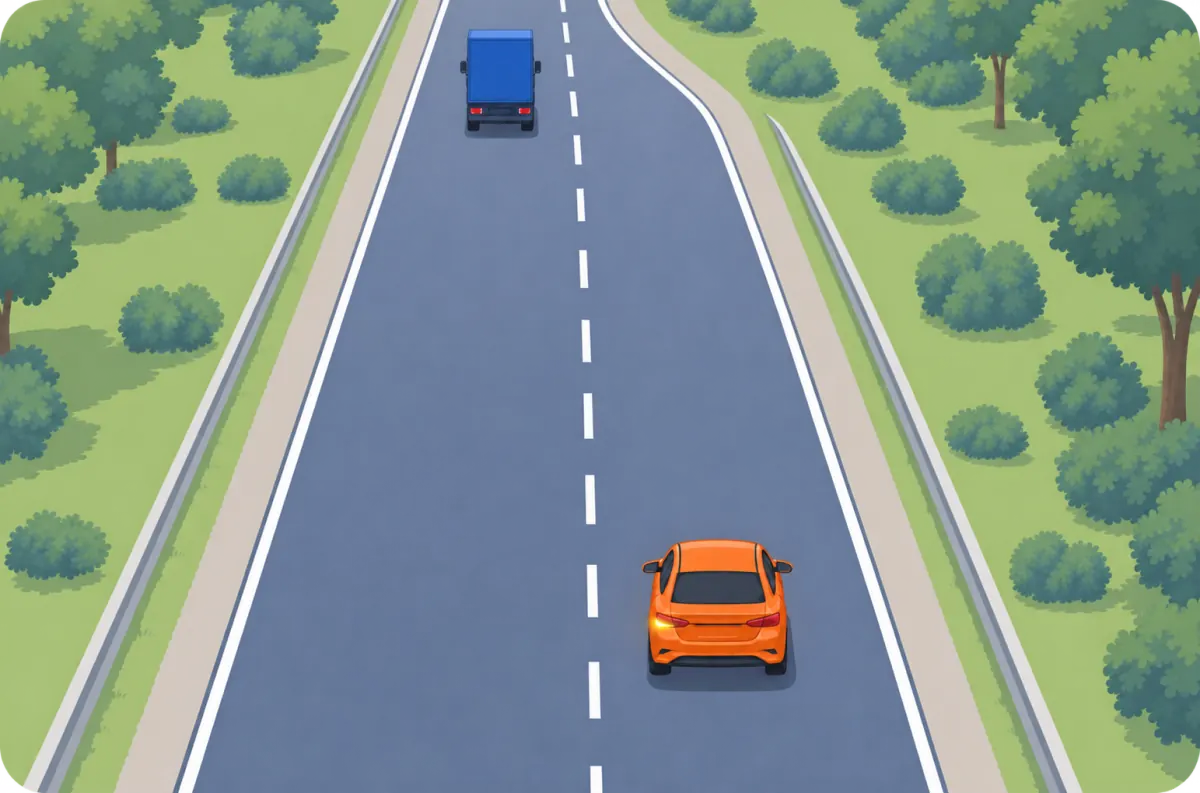
Match the real conditions
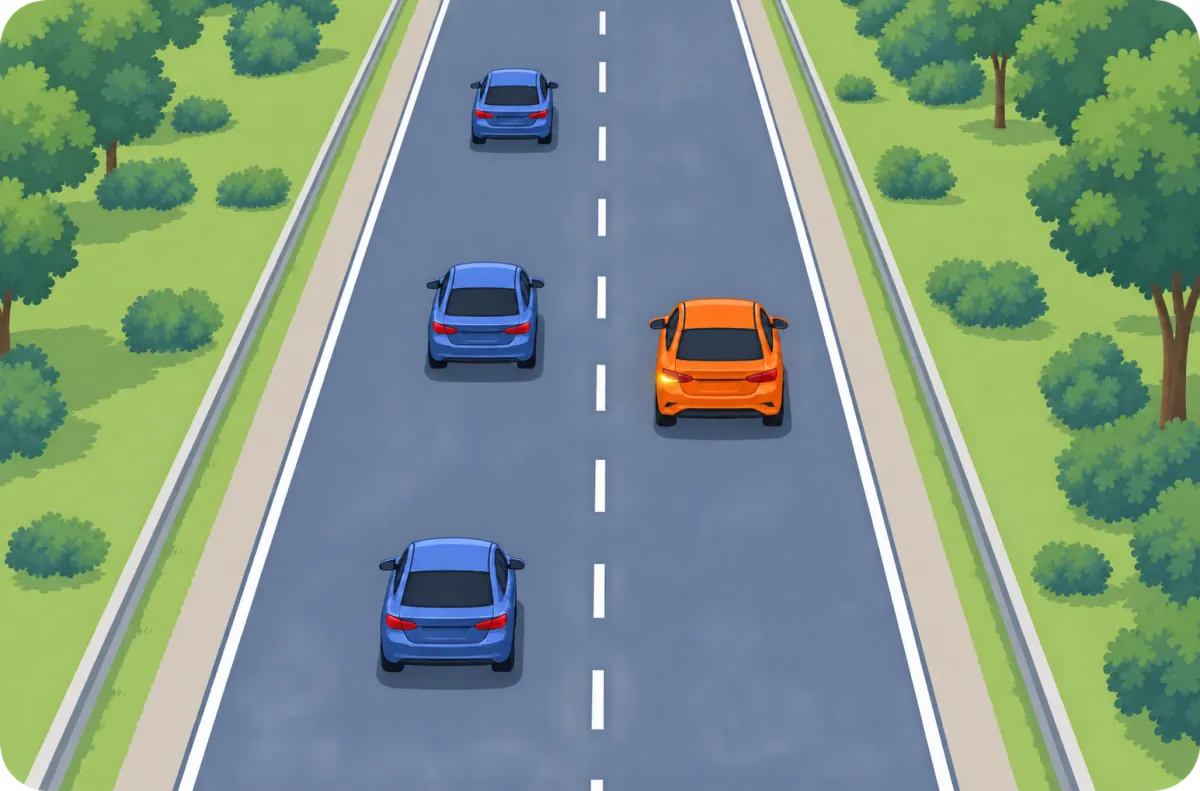
In slow traffic, a safe merge may happen well below the posted limit. In free-flowing traffic, entering much too slowly creates a large speed difference. Your task is to combine the legal limit, available space and actual traffic speed into a safe decision.
Practice question
Before the merge, could you identify the vehicle you intended to merge behind? If the answer came only at the end of the lane, work on looking and planning earlier.