Full G road test · Lesson 4 of 6
Lane Changes and Safe Gaps
On the G test, a lane-change instruction is a request to move when safe. It is not a deadline to cross the line immediately. Your observation and judgment decide whether the next lane is available.
Check before committing
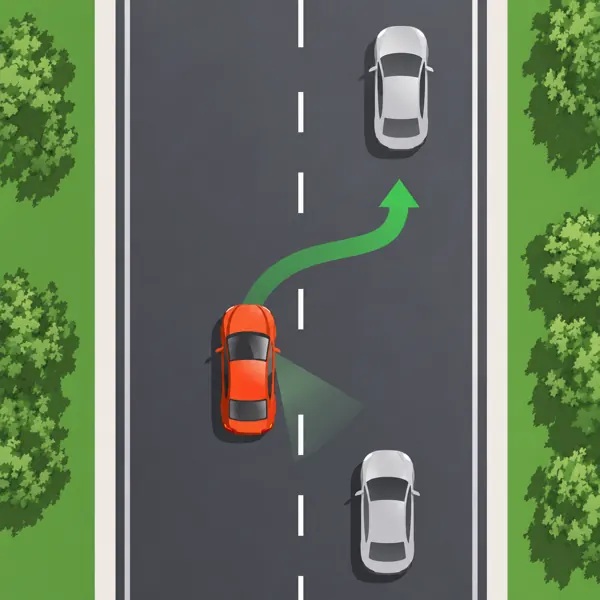
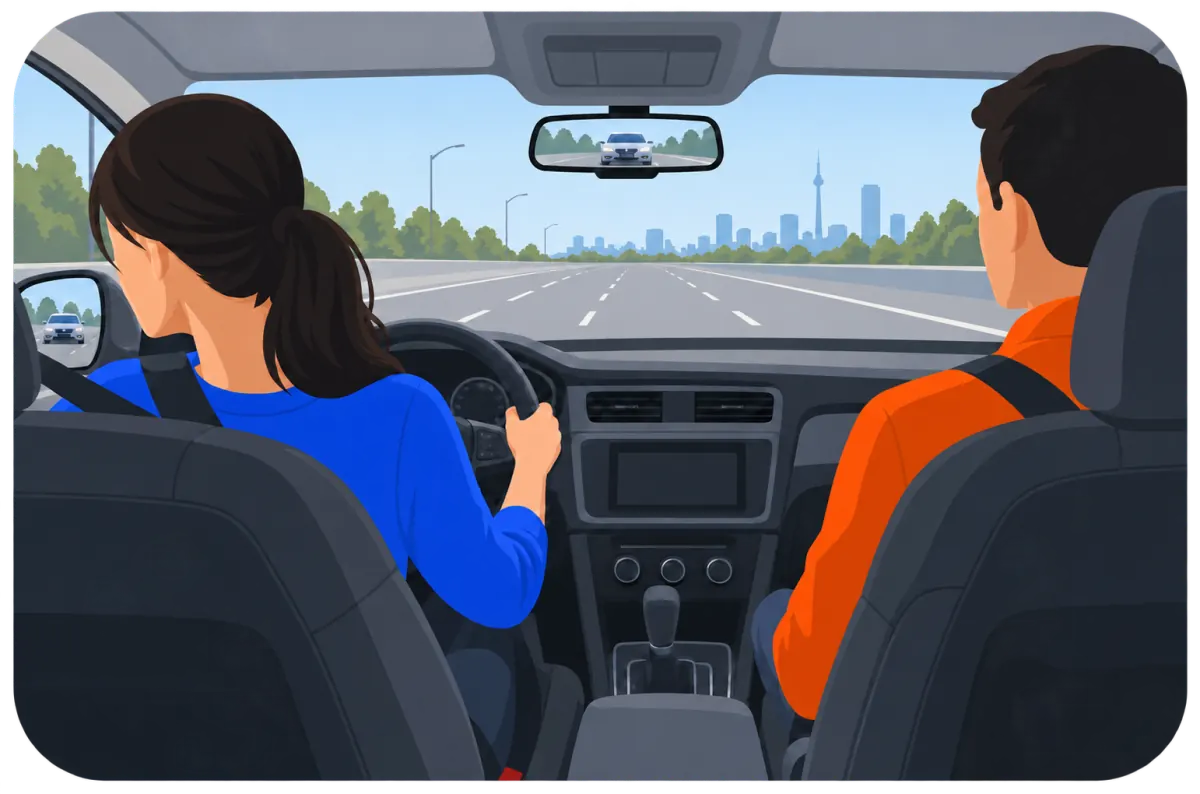
Start with the road ahead and traffic around you. Use your rear-view mirror, the relevant side mirror and a shoulder check to understand the space beside the car. A vehicle further back may be approaching quickly, so judge its movement as well as its current position.
Signal your intention in time for others to understand it. Stay centred in your lane while checking. Immediately before moving, confirm the gap and blind spot again, then return your attention forward.
Move across smoothly at a suitable speed. Avoid a sharp steering input or an unplanned speed drop. Once centred in the new lane, cancel the signal and check your following space.
Choose a gap that lasts
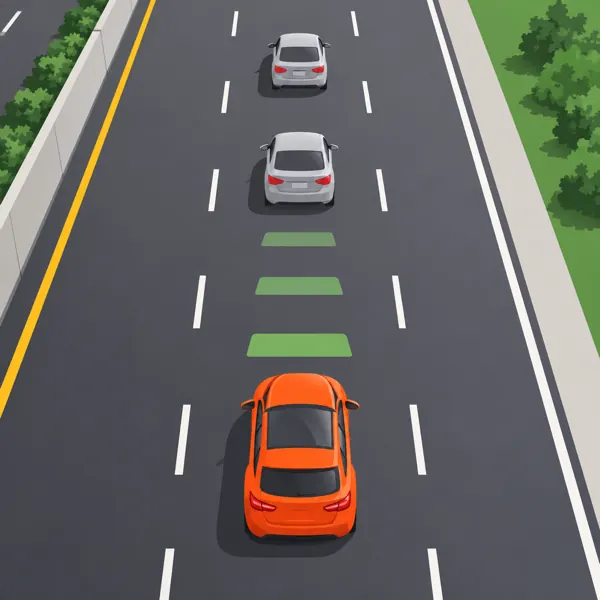
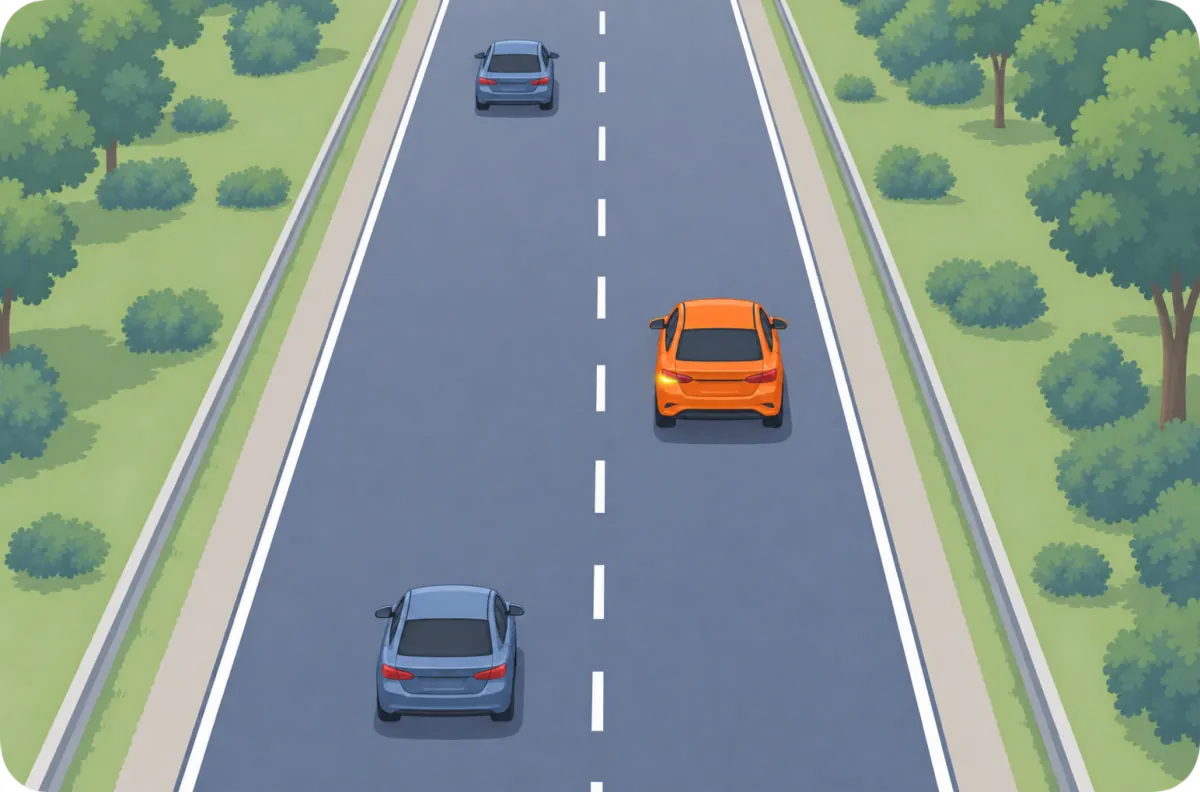
A usable gap needs room ahead and behind after you enter it. Avoid fitting into a space that would require another driver to brake sharply or change direction.
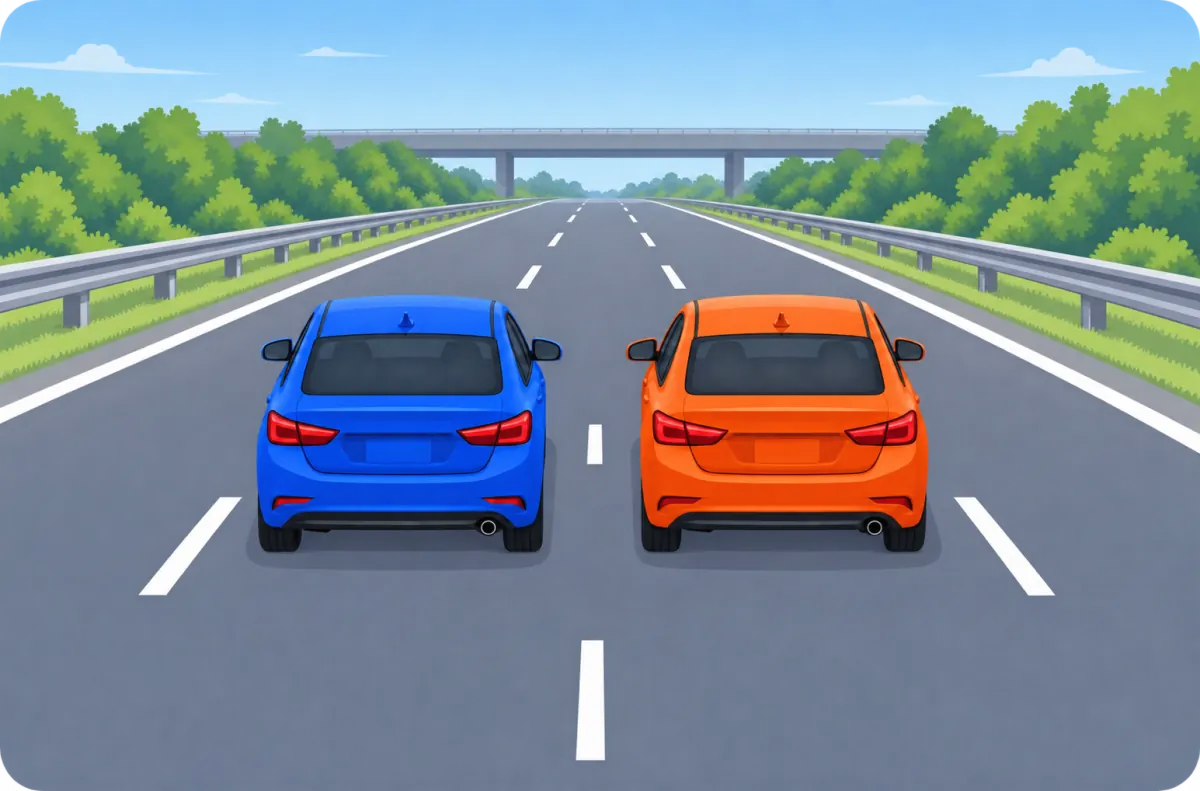
If a car is travelling beside you at a similar speed, a small, safe reduction in your speed may allow it to move ahead. Recheck the traffic behind and the new gap before moving. Do not assume that signalling will make the other driver give way.
On a road with several lanes, another driver may be moving into the same space from the far side. Keep that possibility in your checks. Make each lane change a separate decision, with a fresh observation sequence.
Keep the manoeuvre separate
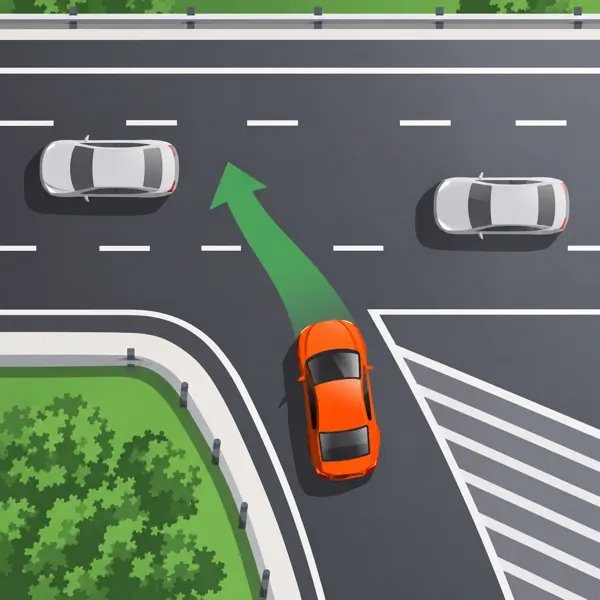
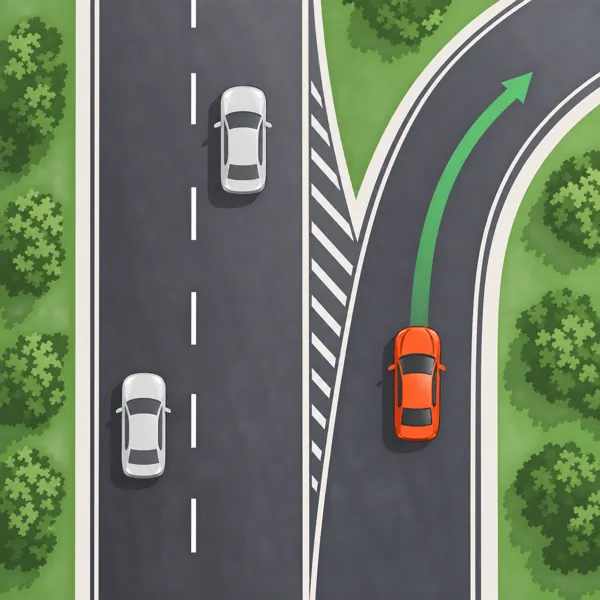
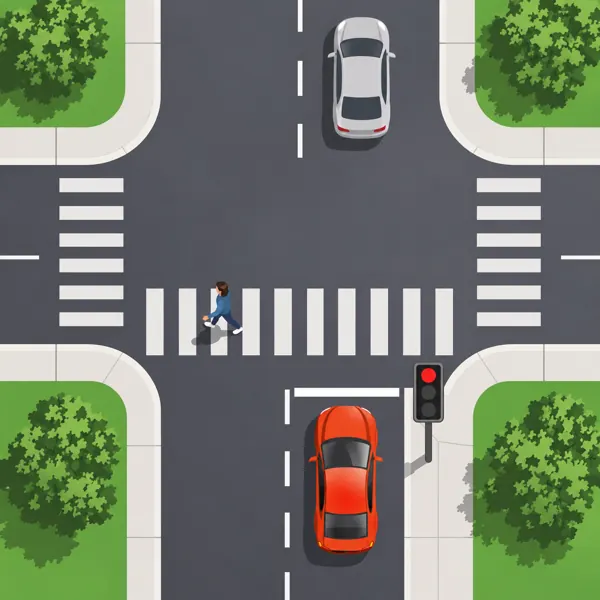
Complete a turn before making a lane change. Avoid changing lanes in an intersection. Follow lane markings and do not cut across painted separation areas or restricted-lane boundaries.
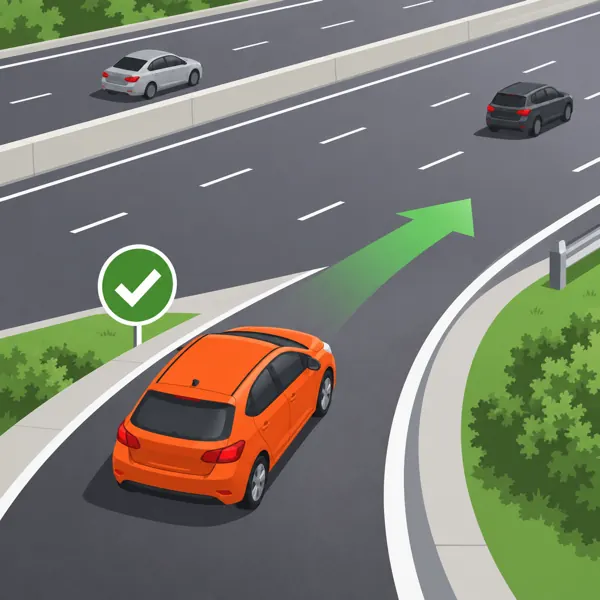
When an exit is approaching, plan your lane choice early. Do not turn one lane change into a sudden sweep across several lanes. Missing a direction is preferable to making an unsafe movement to recover it.

If the gap does not open
Keep driving predictably in your lane. If needed, briefly explain that you are waiting for a safe gap. Continue observing and act when a suitable opportunity appears. If the turn or exit can no longer be reached safely, follow the road legally and wait for new directions.
Practice check
Ask your instructor whether the lane change affected another driver's speed. A smooth steering movement can still be unsafe if the gap is too small.
Practise this on ordinary multi-lane roads as well as highways. The traffic speeds differ, but the need to observe, communicate and confirm space stays the same.