G2 road test · Lesson 3 of 6
Intersections and Turns
Intersections bring several decisions together: where to stop, who goes first, whether the path is clear and which lane to enter. Start observing early so you can make those decisions one at a time.
Make the stop complete
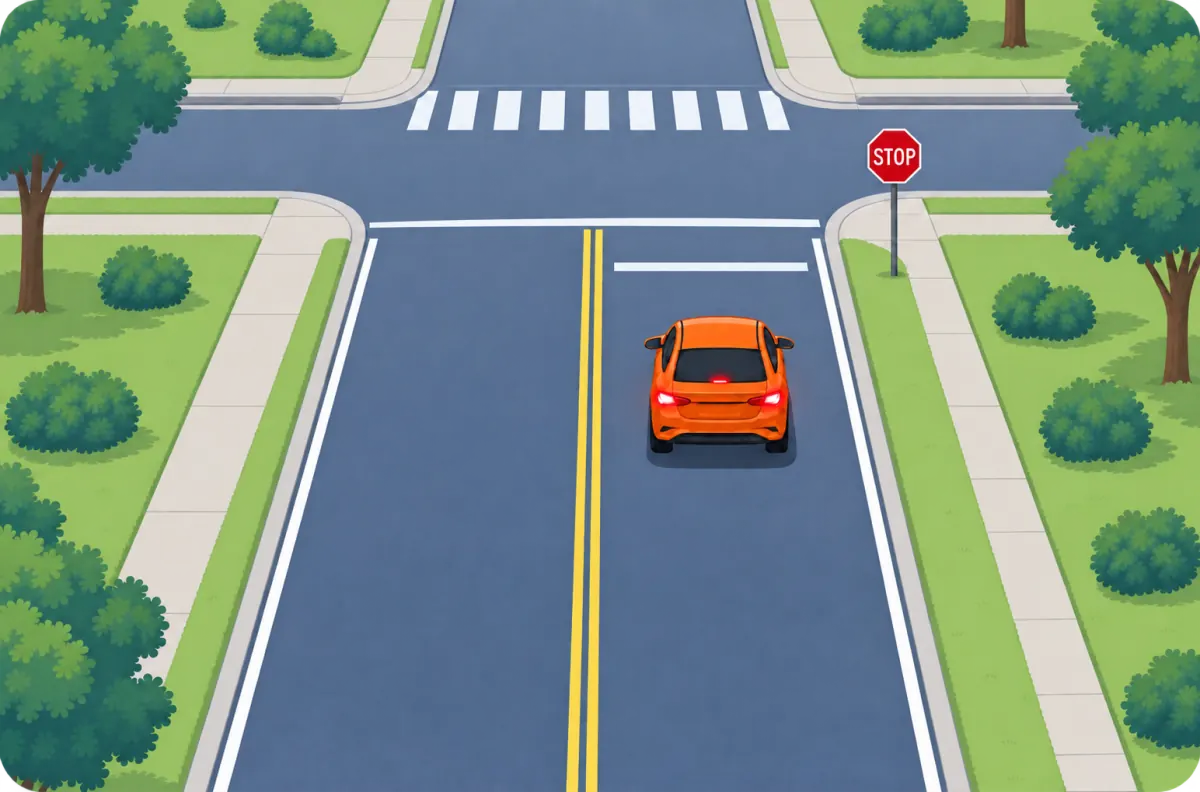
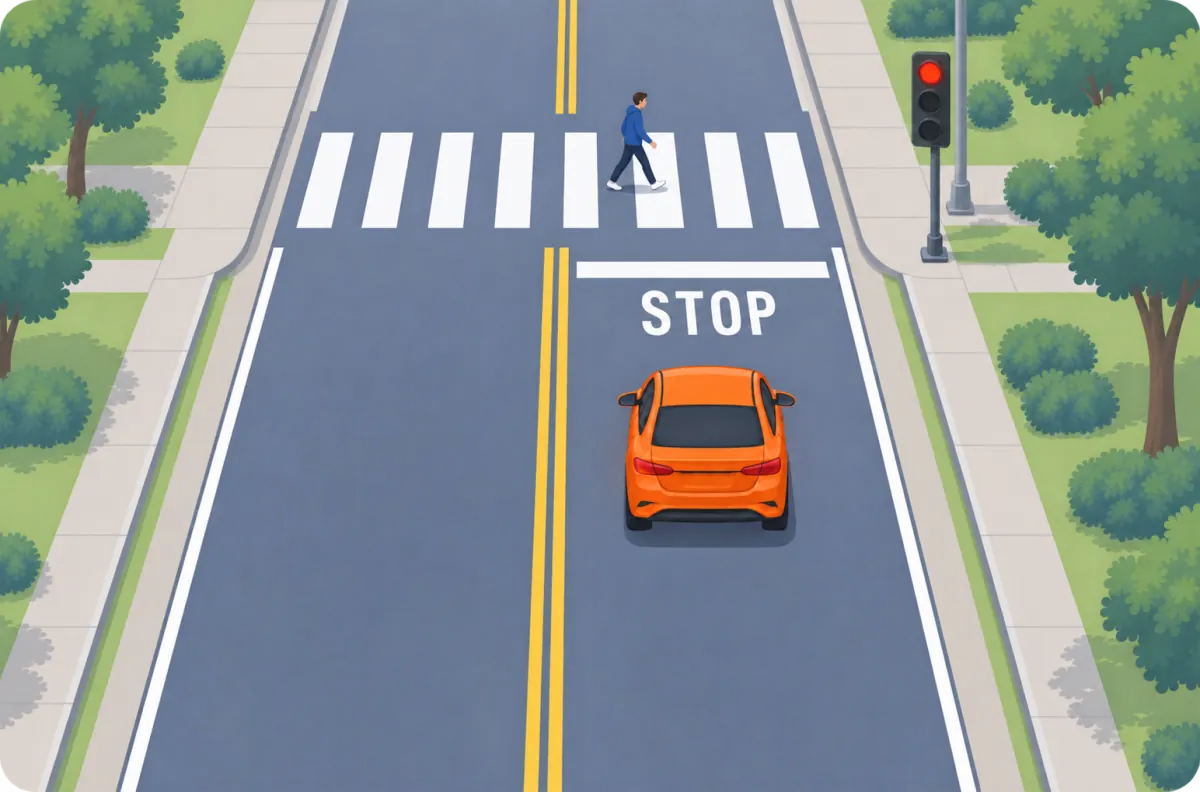
Check behind as you prepare to slow down. Brake progressively and stop before the marked stop line. If there is no line, stop before the crosswalk; if neither exists, use the sidewalk edge, or the intersection edge if there is no sidewalk.
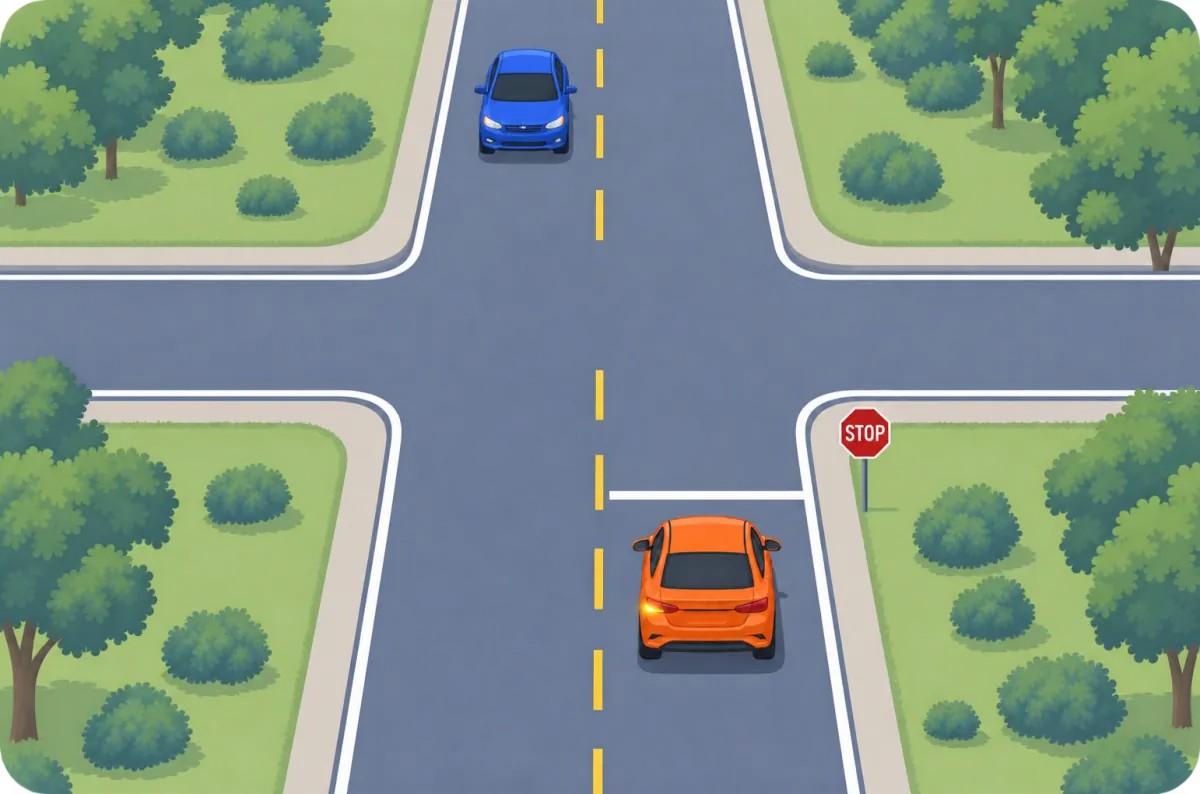
Let the car become fully stationary. Then check left, right and left again, as well as the crossing and the path ahead. If the first stopping position does not give you a view, check for pedestrians and edge forward carefully only as far as needed. Stop again if necessary. Keep yielding to traffic on the road you are entering.
At an all-way stop, follow arrival order; if two vehicles stop together, yield to the vehicle on your right. Watch what the other driver actually does. At a stop that controls only your approach, cross traffic may have no stop sign.
Read lights without rushing
On green, scan for conflicts and continue at a suitable, steady speed if the way is clear. Do not enter a blocked intersection when going straight. If the light changes to yellow, stop when you can do so safely. Avoid accelerating to beat it.
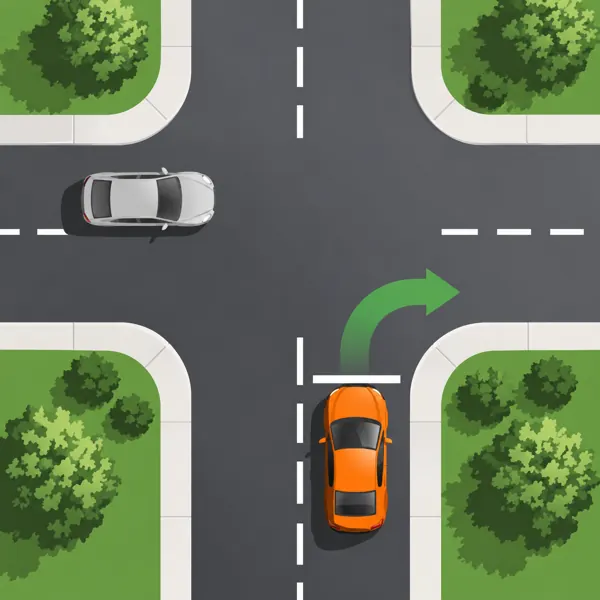
For a right turn on red, first stop completely. Check that the turn is permitted, then yield to pedestrians, cyclists and traffic before turning. If the view or gap is unsuitable, wait.
Set up each turn
- Before the turn: Choose the correct lane, signal, check mirrors and blind spots, and reduce speed before steering.
- Right turns: Watch closely for a cyclist coming up on your right and pedestrians entering your path. Finish in the proper right lane unless markings direct otherwise.
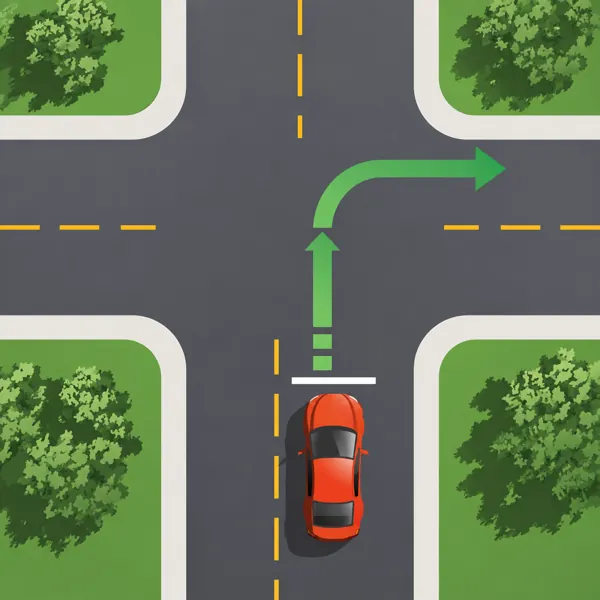
- Left turns: Yield to oncoming traffic and pedestrians. Keep the wheels straight while waiting. Do not turn across a lane you cannot see clearly.
- Through the turn: Look into the lane you intend to enter. Follow lane markings, avoid cutting the corner and control the wheel as you straighten.
Complete the turn before considering a separate lane change. A car behind you sounding its horn does not make an unsafe gap safe.
A situation to practise
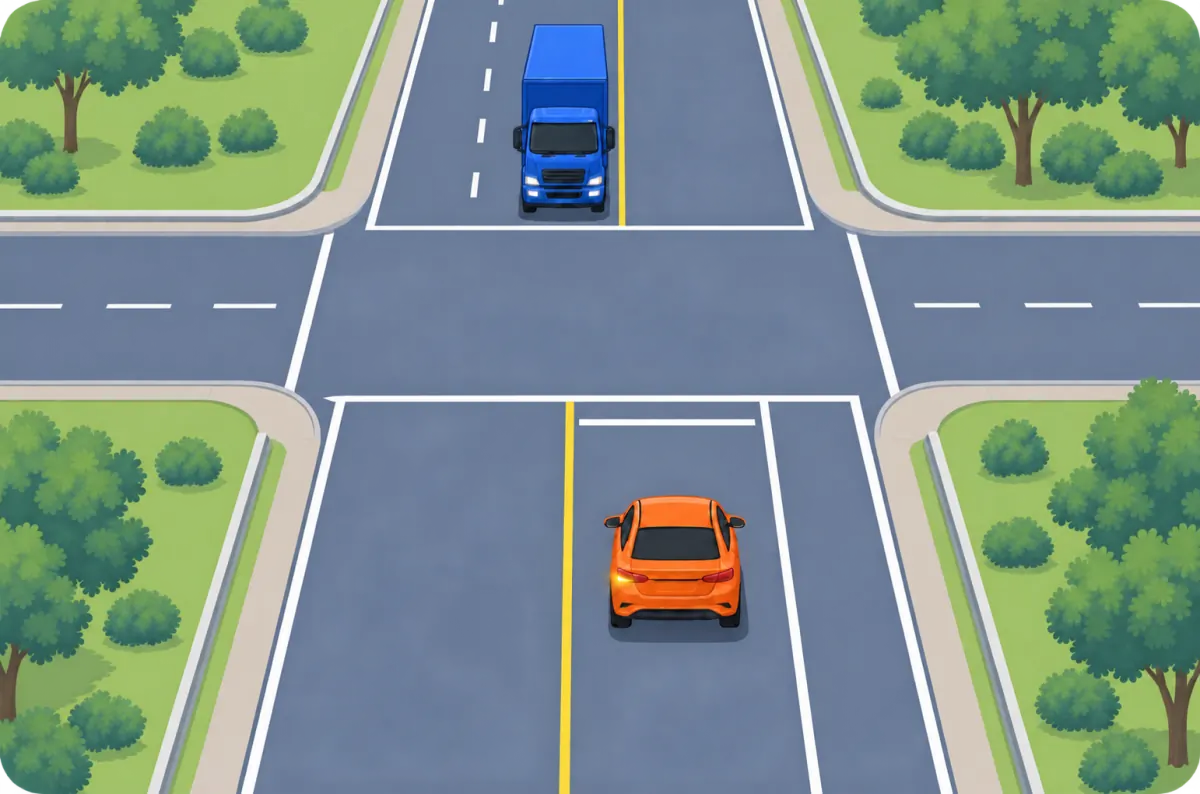
A large vehicle opposite you blocks the view of an oncoming lane while you wait to turn left. Wait until you can verify the path is clear. Do not copy the movement of another turning vehicle or assume the hidden lane is empty.
At pedestrian crossovers and crossings with a crossing guard, wait until the entire roadway is clear of pedestrians and the guard before proceeding. Keep checking even when the traffic around you starts moving.
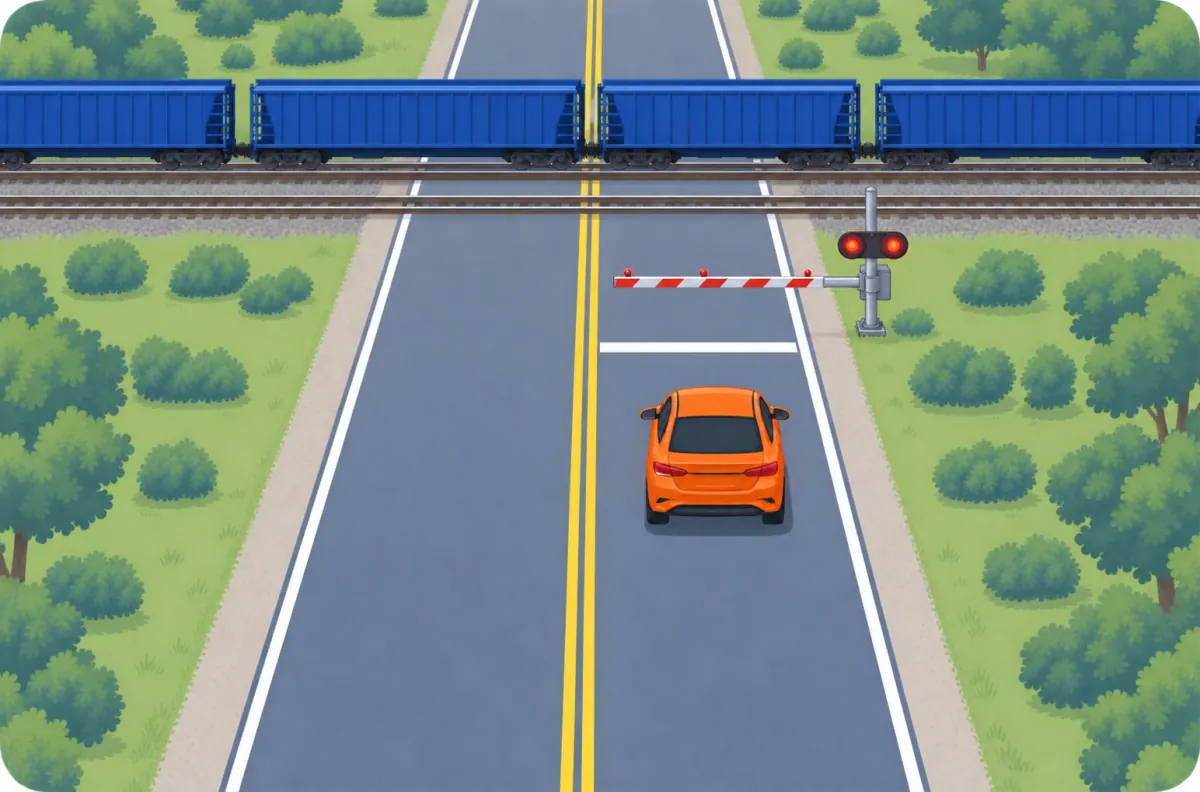
Watch for railway crossings
Slow down, look and listen before crossing railway tracks. Obey the signs, flashing lights and gates. Never enter unless there is room to clear the tracks fully. If you must stop for a train, remain at least five metres from the nearest rail or gate.