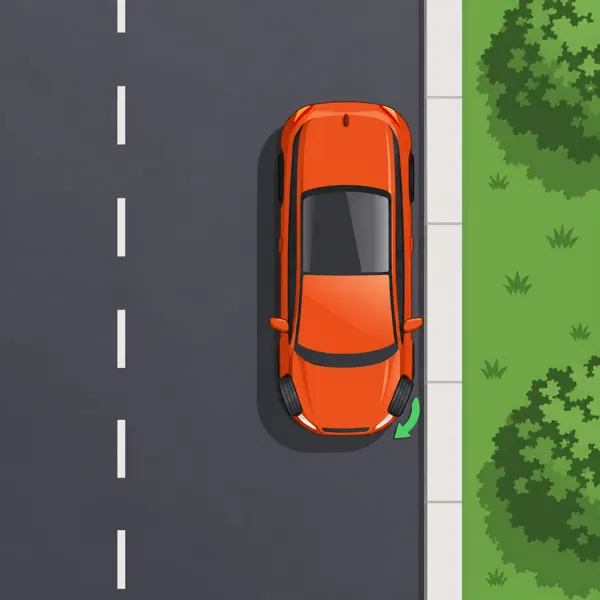
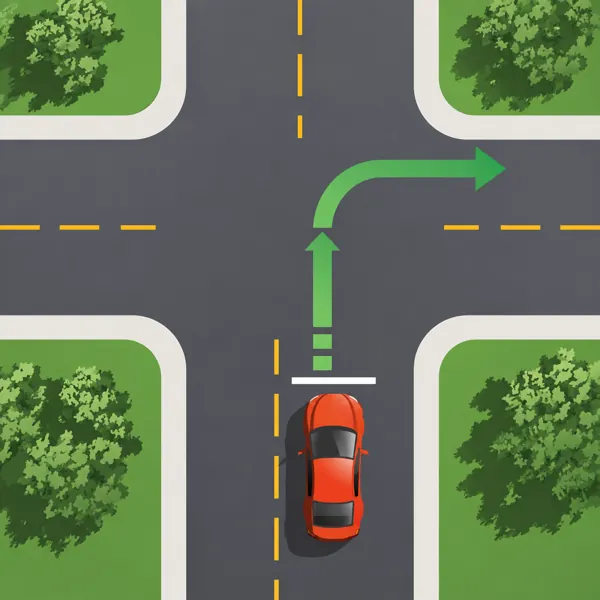
G2 road test · Lesson 4 of 6
Reversing and Parking
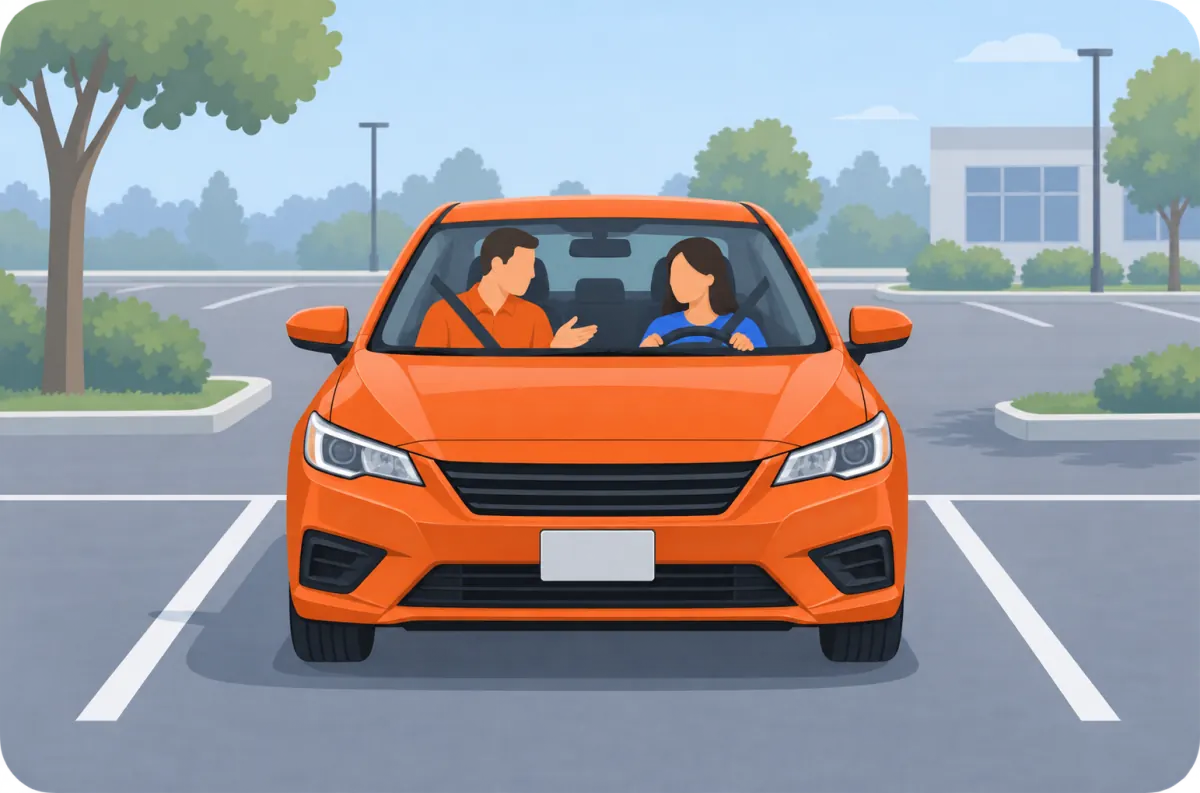
Parking combines observation with slow, accurate control. Give yourself enough time to see where the whole car is moving. A useful reference point can help, but it must work for your seat position, your vehicle and the space in front of you.
Look around before reversing
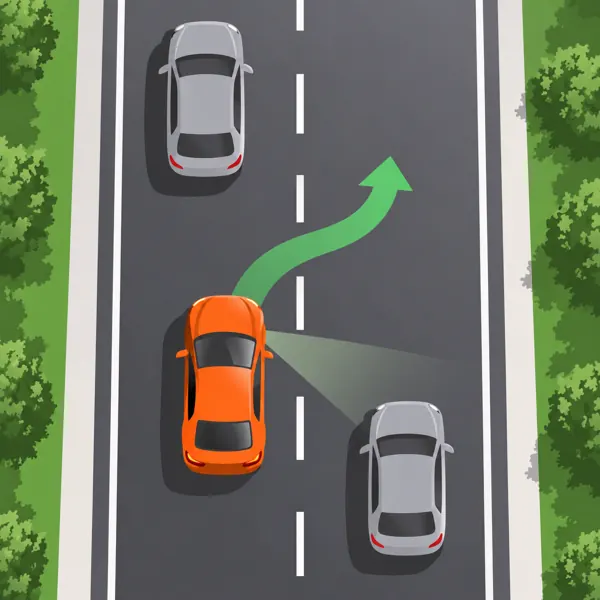
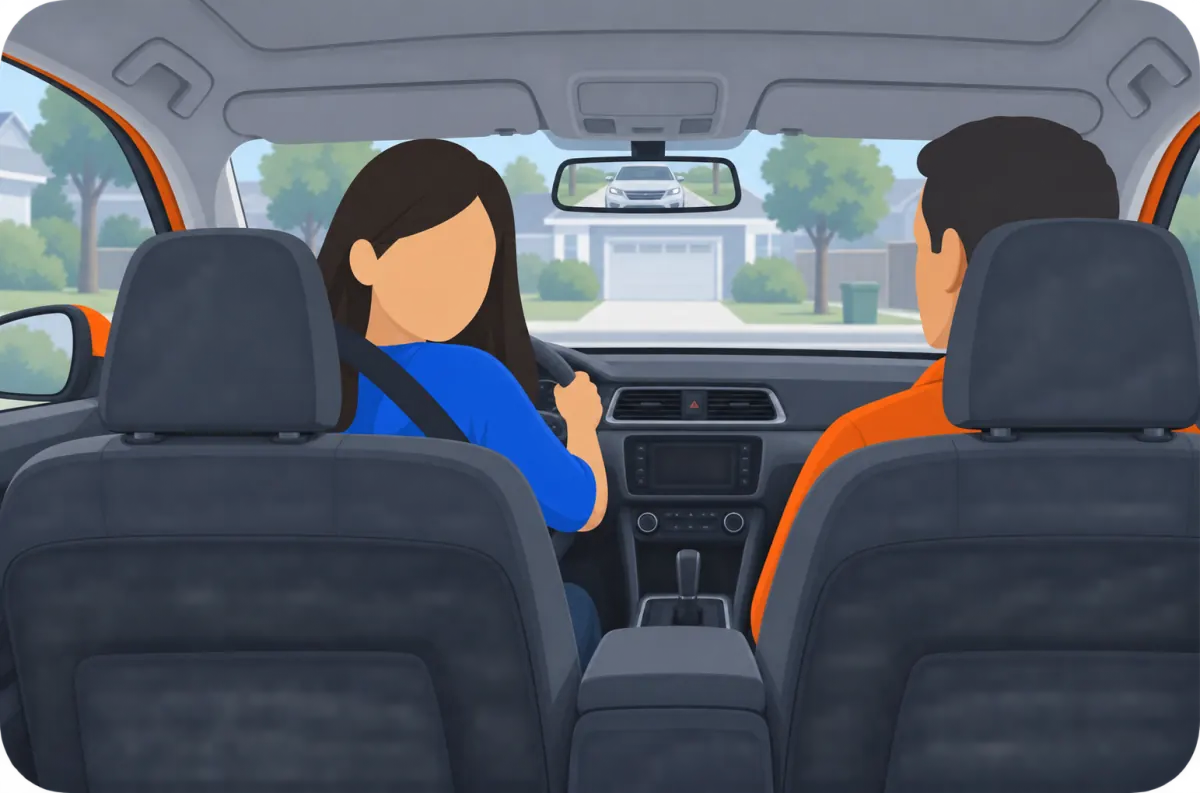
Check all around the vehicle, including behind it and beside both rear corners. Look in the direction of travel while reversing, using mirrors to help monitor clearance. Keep checking for people or vehicles entering the space.
Move slowly enough to stop immediately. If the view becomes uncertain, stop and check again. Do not let the car keep rolling while you work out where an obstacle is. Use direct observation rather than relying on a camera or parking system to do the task.
Parallel parking on the right
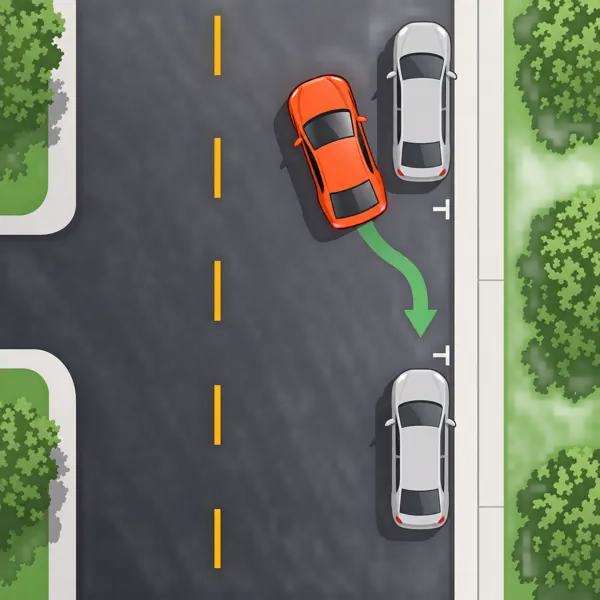
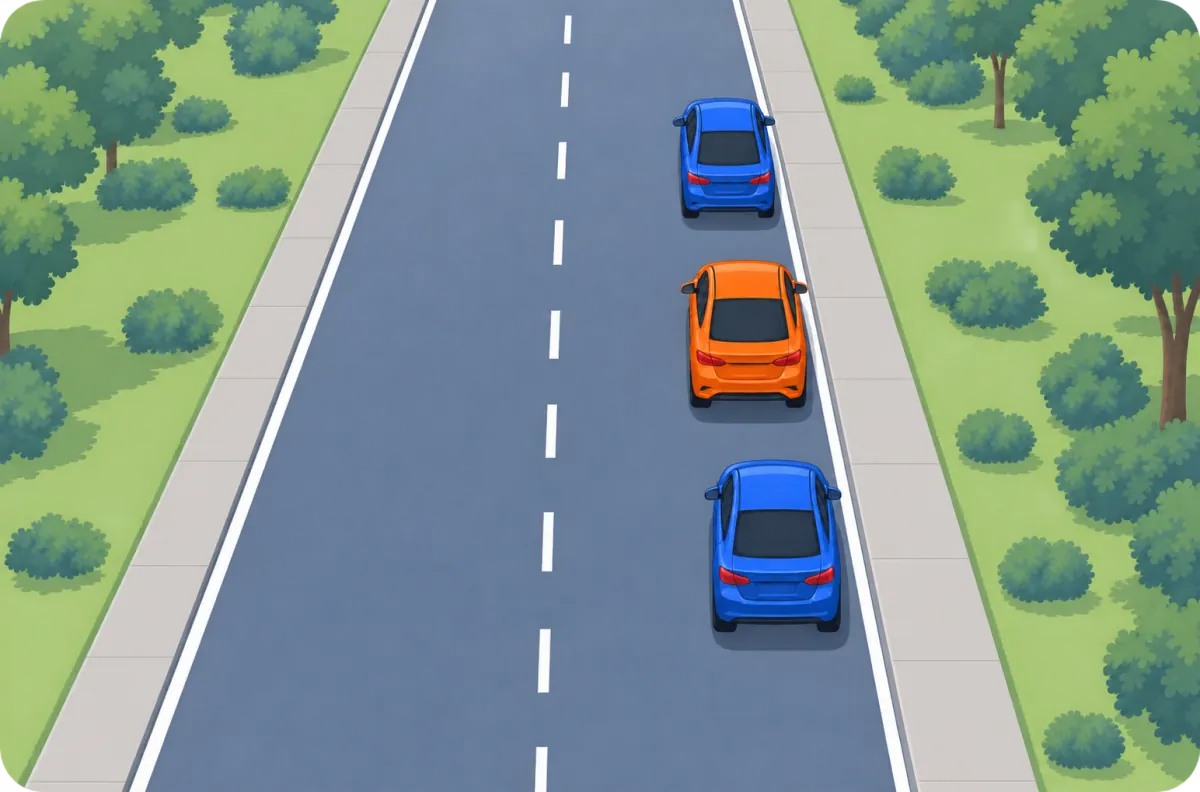
- Choose a legal space with enough room. Signal, check traffic, and stop alongside the vehicle ahead of the space with suitable clearance.
- Check around again. Reverse slowly, steering toward the curb to guide the rear of your car into the space. Watch the front of your car as it swings toward traffic.
- As the rear enters and clears the vehicle ahead, straighten the wheels, then steer away from the curb to bring the front into the space. Continue checking the curb and both vehicles.
- Straighten the car parallel to the curb and leave room ahead and behind. Stop before contact. Make a controlled correction if needed.
- Secure the vehicle with the appropriate gear and parking brake. Follow the examiner's next instruction.
Practise the steering sequence in your test vehicle with your instructor. Avoid treating a particular mirror, window or steering-wheel position from a video as a universal turning point.
Parking in a marked space
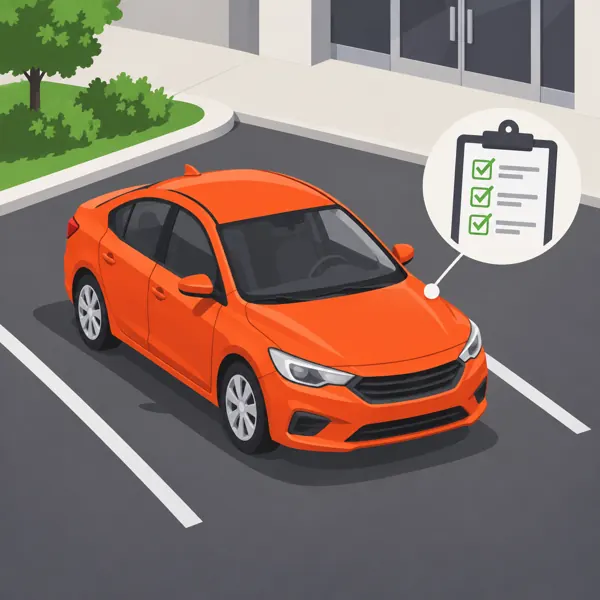
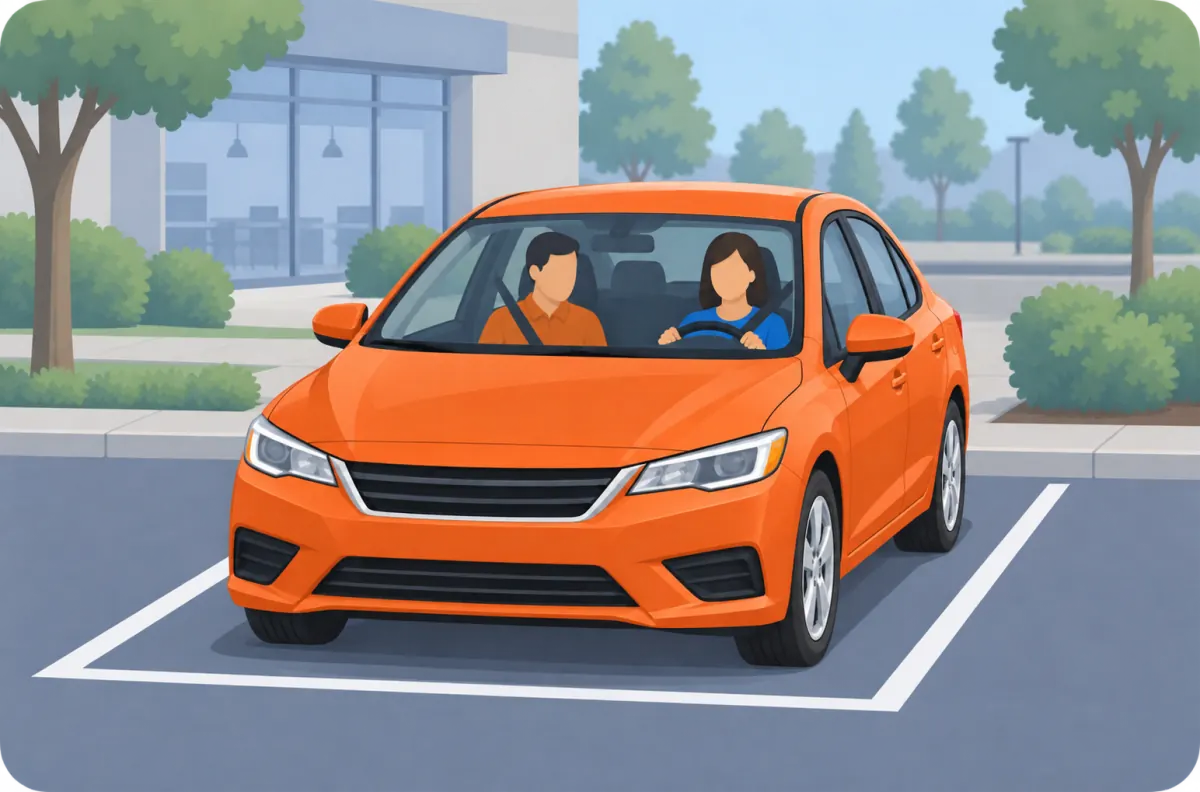
Approach slowly and check the aisle, neighbouring spaces and pedestrians. Give the car enough turning room, then guide it between the lines. For a reverse entry, recheck behind and to the sides before moving. For a forward entry, watch the front corners and the car's path beside adjacent vehicles.
Finish straight and fully within the space. If you need to adjust, stop first, check the area again and make one deliberate movement at a time. Continue observing when leaving the space too.
Common mistake
Looking only at the curb or camera and missing a person approaching from the other side.
Practice check
With your accompanying driver, practise in a quiet, legal area before adding parked vehicles and busier surroundings. Ask them to assess observation, speed, clearance and final position separately. An untidy first approach is information for your next attempt, not a reason to rush the correction.